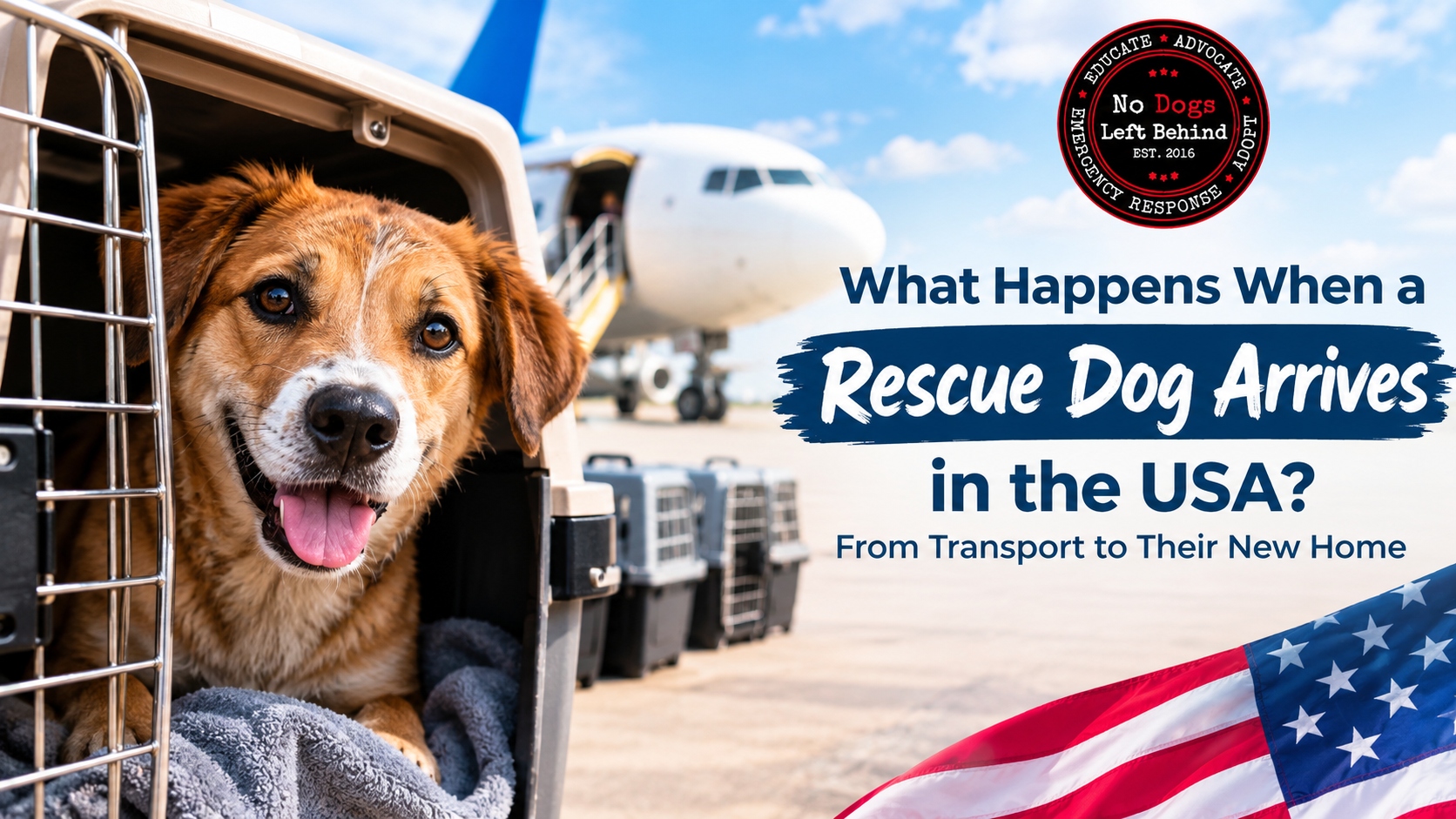
For a rescue dog arriving in the USA, stepping off an international flight is only the beginning of a completely new chapter.
After spending months or even years in difficult circumstances, many rescued dogs must suddenly adjust to unfamiliar surroundings, new people, different routines, and a new way of communicating with the people around them. The journey from an international rescue operation to a permanent home requires careful planning, veterinary care, patience, and support.
At No Dogs Left Behind, rescue does not simply end when a dog leaves a dangerous environment. The organization works to give rescued dogs the opportunity to move through rehabilitation and, when ready, into loving forever homes.
For people considering international rescue adoption, understanding what happens after a dog reaches the USA can make the transition easier for both the dog and the adopter.
A rescue dog’s journey to the USA involves preparation long before the flight takes place.
International rescue organizations must coordinate transportation, veterinary documentation, health requirements, caregivers, and receiving arrangements. Each part of the process is important because international animal transport involves multiple logistical and animal-welfare considerations.
Before departure, dogs may receive veterinary examinations and other necessary care based on their individual circumstances.
The goal is to make sure the dog is prepared for the next stage of its journey and that the necessary documentation and arrangements are in place.
For people researching the adoption process, the No Dogs Left Behind adoption information page can provide additional context about welcoming a rescued dog into a new family.
International transportation can be a major experience for a rescue dog.
Many dogs have never experienced airports, airplanes, travel crates, or long-distance transportation before. Care teams therefore need to consider the dog’s health, safety, comfort, and individual needs throughout the journey.
Depending on the circumstances, transportation may involve:
The process requires coordination between people in the country of origin and the teams receiving the dogs in the USA.
Once the rescue dog arrives in the USA, the journey continues.
Depending on the dog’s circumstances and adoption arrangements, the dog may first go to a foster home, sanctuary, partner organization, or its adopter.
This initial period gives caregivers an opportunity to observe the dog’s condition and behavior while helping the animal adjust to its new surroundings.
For some dogs, everything may feel unfamiliar.
New smells, sounds, people, furniture, flooring, household appliances, and even ordinary activities can take time to understand.
Veterinary care remains an important part of the transition.
Internationally rescued dogs may have different medical histories and individual healthcare needs. A veterinarian can evaluate the dog’s current condition and determine whether additional treatment, vaccinations, parasite prevention, testing, or follow-up care is needed.
Medical care can also help establish a baseline for the dog’s health after arrival.
Adopters should keep copies of available veterinary records and follow the recommendations provided by their veterinarian.
Every rescue dog is different, so healthcare should be based on the individual animal rather than assumptions about its background.
One of the biggest mistakes people can make after bringing home a rescue dog is expecting an immediate transformation.
A dog that appears frightened, withdrawn, or confused during the first few days may simply need time to understand that its circumstances have changed.
The dog may:
These behaviors do not necessarily mean that the adoption is unsuccessful.
They can be part of the adjustment process.
Learning more about helping a traumatized rescue dog adjust to a new home can help prospective adopters understand why patience and consistency matter during this stage.
A quiet and predictable environment can help a newly arrived rescue dog settle in.
Many adopters choose to establish a dedicated area where the dog can rest without being disturbed. This might include a comfortable bed, water, food, toys, and other familiar items.
The purpose is not to isolate the dog permanently.
Instead, a safe space gives the dog somewhere to retreat when the new environment becomes overwhelming.
Family members should allow the dog to approach them at its own pace rather than forcing interaction.
Trust cannot be rushed.
A rescue dog may have experienced situations where humans were associated with fear or uncertainty. Learning that people can provide food, safety, comfort, and consistent care may take time.
Simple routines can help.
Feeding at consistent times, using calm communication, taking predictable walks, and maintaining a stable household routine can make the new environment easier for the dog to understand.
Small moments can become important milestones.
A dog choosing to approach its adopter, accepting gentle affection, playing with a toy, or relaxing in the same room can all represent meaningful progress.
Introducing a rescue dog to a new family should be handled gradually.
Adults should give the dog time to become comfortable before expecting close interaction.
If children live in the household, they should learn how to approach the dog calmly and respect its boundaries.
The same principle applies to visitors.
A newly arrived rescue dog does not need to meet everyone immediately. Keeping the first few days relatively calm can give the dog an opportunity to become comfortable before experiencing a busy household.
Households with existing pets may require additional planning.
Dogs should generally be introduced gradually and under controlled circumstances. Adopters can work with their veterinarian or qualified animal behavior professional if they need guidance about introductions.
The goal is to avoid overwhelming either animal.
Each dog has a different personality, history, and comfort level, so introductions should be adjusted accordingly.
Routine can provide reassurance.
A newly arrived dog may not immediately understand what is expected in its new home. Consistent schedules for meals, bathroom breaks, walks, rest, and play can help create predictability.
Over time, the dog may begin to recognize household patterns.
This can make everyday life feel less uncertain and help the dog become more comfortable in its new environment.
For adopters who want to understand the broader process, the No Dogs Left Behind adoption guide provides another useful resource to explore before and during the adoption journey.
Adoption does not necessarily mean rehabilitation is finished.
Some rescue dogs continue developing confidence after entering their forever homes.
They may need time to become comfortable with:
Progress can happen gradually.
Some dogs adjust quickly, while others need considerably more time and patience.
One of the most meaningful parts of rescue adoption is watching a dog discover ordinary experiences.
A dog that once lived in an unsafe environment may eventually enjoy sleeping on a comfortable bed, exploring a yard, going for walks, playing with toys, or simply relaxing beside its family.
These moments may appear ordinary to an adopter.
For a rescue dog, however, they can represent an entirely different way of life.
The transition is not always easy, but patience and consistency can create the foundation for a strong relationship.
Every international rescue adoption is different.
Some dogs may arrive confident and social. Others may be nervous or cautious.
Adopters should be prepared for an adjustment period rather than expecting the dog to immediately behave like a settled household pet.
Important qualities for adopters include:
The first few weeks are about building a relationship, not demanding perfection.
For additional perspective on this transition, what happens after adopting a rescue dog from China explores the experiences that can follow international rescue adoption.
When a rescue dog arrives in the USA, the journey that began during the rescue operation enters a completely different stage.
The dog is no longer focused only on survival.
Now, it has an opportunity to learn what safety, routine, companionship, and family life can look like.
For adopters, the experience can be deeply meaningful because they are not simply bringing a dog into their home. They are helping that animal begin a new chapter.
The arrival of a rescue dog in the USA marks the beginning of a new journey rather than the end of the rescue process.
From international transportation and veterinary care to creating a safe environment, establishing routines, and building trust, every stage requires patience and thoughtful care.
Some dogs adjust quickly. Others need more time.
What matters most is allowing the dog to feel safe and allowing its personality to emerge at its own pace.
For a rescue dog coming from a difficult past, a quiet home, consistent care, and a patient family can provide something incredibly important: the chance to finally experience life beyond survival.
After arriving in the USA, a rescue dog may go to a foster home, sanctuary, partner organization, or its adopter, depending on the individual adoption arrangements. Veterinary care and adjustment to the new environment are important parts of the transition.
Veterinary follow-up may be recommended depending on the dog’s medical history, existing records, and individual health needs. Adopters should work with a veterinarian to determine appropriate care.
There is no single timeline. Some dogs become comfortable relatively quickly, while others need considerably more time. A predictable routine, patience, and respect for the dog’s boundaries can support the adjustment process.
Not necessarily. Allowing a newly arrived dog to settle in before introducing numerous people can help reduce stress. Introductions should be gradual and based on the dog’s comfort level.
Yes. Adoption can be another stage of rehabilitation. Some dogs may continue developing confidence and learning how to navigate new environments, routines, people, and other animals after entering their forever home.

