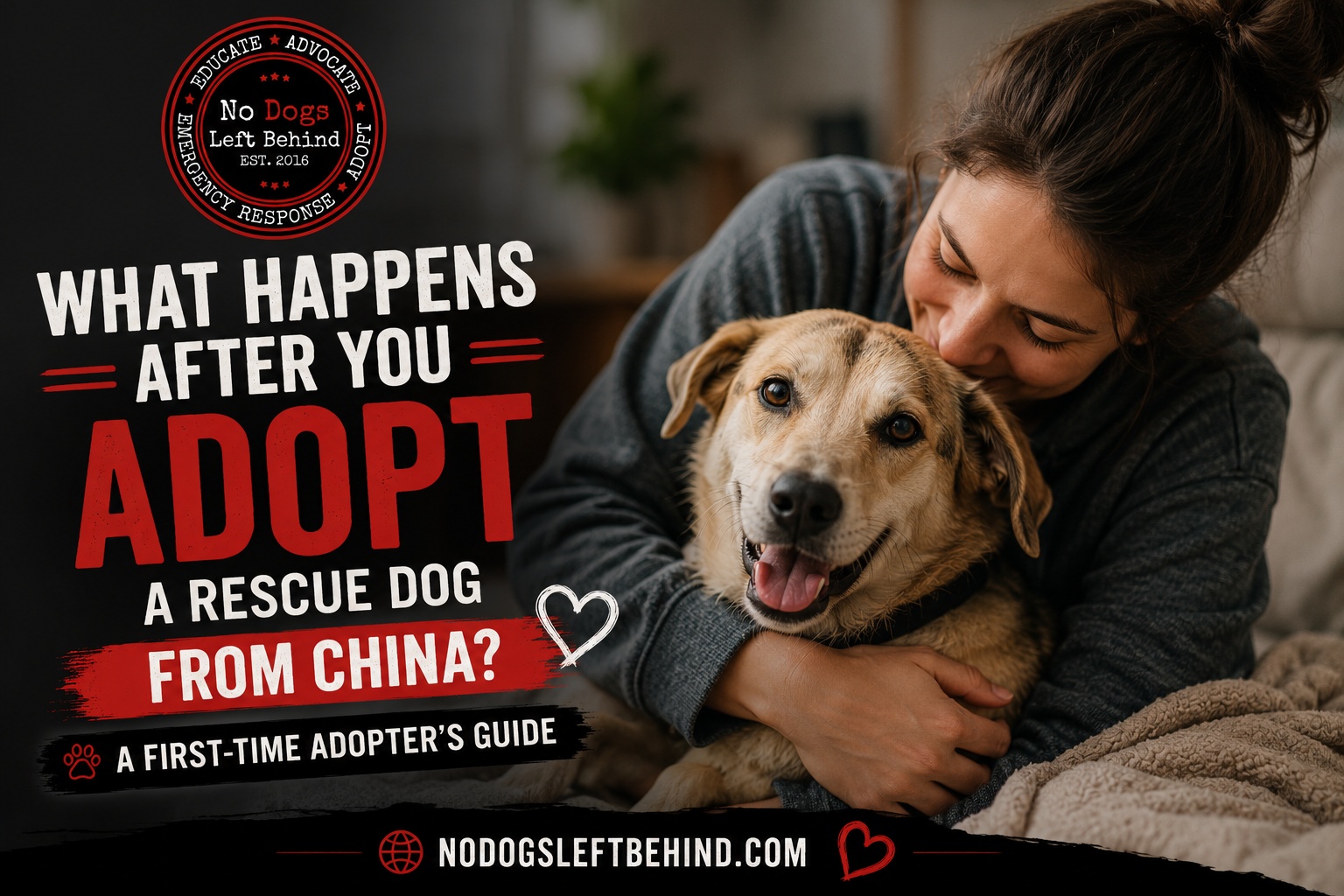
Bringing home a rescue dog is exciting. It’s also a big adjustment—for both you and the dog.
Many adopters imagine the moment their new dog walks through the door and immediately feels safe and happy. Sometimes that happens. But in many cases, rescue dogs need time to settle in, especially when they have come from difficult situations and traveled long distances to reach their new home.
Dogs rescued from the meat trade or severe neglect often arrive with a very different life experience than a typical pet. Some have known fear. Some have never lived inside a home. Others may simply feel overwhelmed by everything changing at once.
If you are adopting a rescue dog from China, it helps to understand what those first days and weeks may look like. Here is what many first-time adopters can expect.
One of the biggest surprises for adopters is that their new dog may not act the way they expected.
Instead of being playful or excited, many rescue dogs are quiet, cautious, or withdrawn.
This is normal.
Think about what the dog has just experienced:
That is a lot of change in a short time.
Some dogs may:
This doesn’t mean something is wrong. It often means the dog is processing a new environment and trying to feel safe.
Patience matters during this stage.
Trust does not always happen on day one.
A rescue dog may not understand that it is finally safe. It may take time for that message to sink in.
The best thing adopters can do is keep things simple.
Helpful ways to build trust include:
Avoid forcing interaction too quickly.
Some dogs want affection right away. Others need days or weeks before they feel comfortable enough to come closer.
Trust is built through consistency, not pressure.
A calm environment helps the dog learn that nothing bad is going to happen.
First-time adopters sometimes worry when their dog behaves in unexpected ways.
But many adjustment behaviors are common after rescue.
You may notice:
A dog may choose a quiet corner, crate, or space under furniture. This is often a coping response.
Stress can affect appetite. Some dogs need time before eating normally.
Even if a dog is healthy, new surroundings can disrupt routine.
Television, stairs, doors, or household noises may feel unfamiliar.
Some dogs become attached quickly and feel anxious when left alone.
These behaviors do not always mean long-term problems. They often improve as the dog begins to feel secure.
Even if your dog arrives with medical records, scheduling a veterinary checkup after adoption is a smart step.
A local vet can:
This visit also gives adopters peace of mind.
Sometimes rescue dogs need follow-up care after arrival. Other times, the dog may simply need a routine wellness check.
A vet becomes an important part of your dog’s new support system.
Dogs thrive on routine, especially after stress.
Simple daily structure can help a rescue dog adjust faster.
This includes:
Routine creates security.
When dogs know what to expect, anxiety often decreases.
Even small habits can help them settle in more quickly.
Physical rescue can happen in a day.
Emotional healing takes longer.
This is one of the most meaningful parts of adoption.
At first, your dog may seem unsure.
Then small changes begin.
Maybe they wag their tail for the first time.
Maybe they come closer instead of hiding.
Maybe they rest beside you instead of across the room.
These moments may seem small, but they represent trust.
Over time, many adopters see remarkable transformation.
Dogs that once seemed fearful become playful. Dogs that avoided touch begin seeking affection.
Healing is rarely instant. But it can be powerful.
Some rescue dogs connect quickly.
Others need more time.
It’s important not to compare your dog to another adopter’s experience.
Every rescue story is different.
Your dog’s pace is the right pace.
Bonding often grows through:
Sometimes the strongest bonds are built slowly.
That trust, once earned, can become incredibly deep.
Adopting a rescue dog is rewarding, but it is not always easy.
There may be moments when you wonder if you are doing enough.
That’s normal too.
Remember:
Your dog is learning.
You are learning.
Adjustment takes time on both sides.
Support from rescue teams, trainers, or veterinarians can help if challenges come up.
Asking for guidance is part of responsible adoption.
Many adopters describe rescue as one of the most meaningful experiences of their lives.
Not because everything was perfect right away—but because they got to witness change.
A dog that once lived in fear begins to feel joy.
A dog that once had no safe future begins to trust.
These transformations don’t happen overnight.
They happen through patience, care, and love.
And that is what makes rescue so special.
Adopting a rescue dog from China is not just about bringing home a pet. It’s about helping a dog begin a completely new life.
The first few days may feel uncertain. The adjustment may take time. But with patience, routine, and understanding, many rescue dogs grow into loving and loyal companions.
Every rescue journey is different.
But for many adopters, the wait, the work, and the adjustment become part of a story they never forget.
If you are considering rescue adoption, take time to understand the journey and prepare for the adjustment ahead.
A little patience can make a huge difference, and for one rescued dog, it can mean the beginning of a life they never thought possible.

