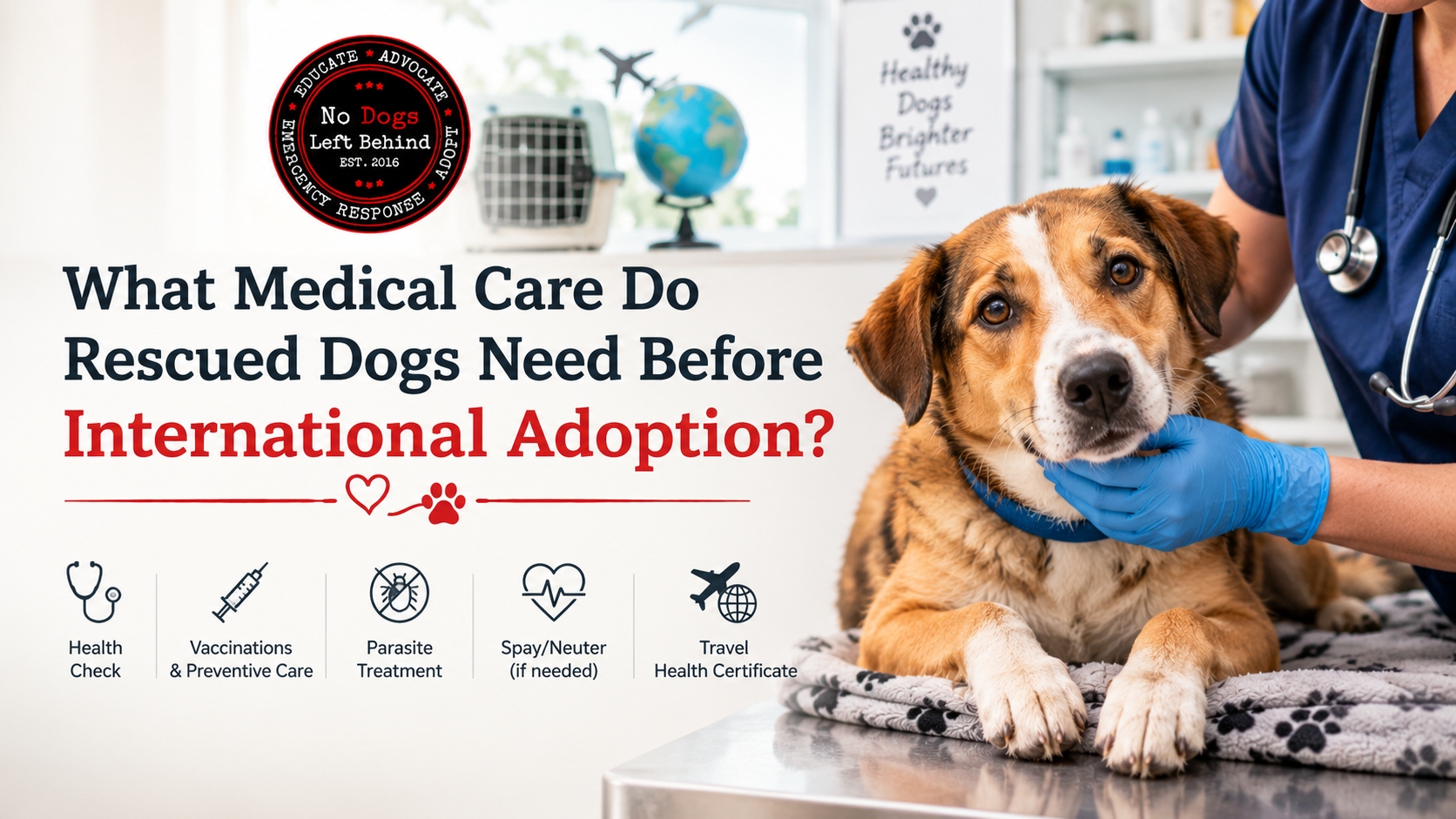
International adoption can give a rescued dog the opportunity to begin a completely different life. However, before a dog can travel from a rescue operation to a new home in another country, its health and overall condition need careful attention.
For rescued dogs coming from difficult environments, veterinary care is an important part of the journey. At No Dogs Left Behind, rescue continues beyond removing dogs from dangerous situations. Medical treatment, rehabilitation, vaccination, deworming, observation, and preparation for adoption all contribute to helping rescued dogs move toward a safer future.
For families considering international rescue adoption, understanding the medical-care process can also provide a clearer picture of what happens before a dog is ready to begin life in a new home.
Rescue is only the beginning of a dog’s recovery.
Dogs rescued from trafficking operations, slaughter trucks, illegal holding facilities, wet markets, or slaughterhouses may arrive in need of immediate attention. Their individual conditions can vary, which means veterinary professionals need to assess each dog and determine what care is appropriate.
Some dogs may be physically weak after experiencing poor living conditions. Others may need treatment for injuries, infections, parasites, dehydration, or nutritional problems.
This is why medical care cannot be treated as a single step.
Instead, it becomes part of the dog’s larger journey from rescue to rehabilitation and eventually, when ready, international adoption.
One of the first important steps after rescue is understanding the dog’s current health condition.
A veterinary evaluation can help caregivers determine what treatment or additional care the dog may require. Because every rescue dog has a different history, care should be based on the individual animal’s condition.
A veterinary assessment may help identify concerns that are not immediately obvious.
For example, a dog may appear physically stronger after rescue while still requiring additional care or monitoring. Other dogs may show more obvious signs that they need medical attention.
The purpose of the evaluation is to establish an understanding of the dog’s health and help caregivers develop an appropriate plan.
Some rescued dogs need medical attention before they can move forward in their journey.
Depending on the dog’s condition, veterinary care may address concerns such as:
Not every dog will require the same treatment.
Some may recover relatively quickly, while others may require a longer period of care before they are healthy enough to continue toward adoption.
This individual approach is important because international rescue dogs do not all arrive with the same medical history or needs.
Vaccination is another important part of preparing rescued dogs for their next stage.
Before international adoption, dogs may need appropriate vaccinations based on their individual circumstances and veterinary recommendations.
Vaccinations are part of preparing a dog for a healthier future and can also be an important consideration when an animal will be transported internationally.
Caregivers and adopters should keep available veterinary records and follow the recommendations provided by the veterinary team caring for the dog.
Because requirements can vary depending on the destination and the dog’s circumstances, adopters should rely on current veterinary and official guidance rather than assuming every rescue dog follows exactly the same medical process.
Parasite care can also be part of a rescued dog’s medical journey.
Dogs coming from difficult environments may require deworming or other parasite-related treatment based on their individual needs.
Veterinary professionals can determine what treatment is appropriate and whether additional monitoring is necessary.
This is one reason medical preparation should happen before a dog begins international travel. The goal is to understand the dog’s condition, provide appropriate care, and allow caregivers to monitor its progress.
Medical treatment is not necessarily finished as soon as a dog receives initial care.
Observation can provide caregivers with time to monitor the dog’s condition and recovery.
During this period, the rescue team and veterinary professionals can continue watching the dog’s health and overall progress. If additional care is needed, the dog can receive appropriate attention before moving to the next stage.
An observation period can therefore become an important part of responsible preparation.
It gives caregivers an opportunity to understand how the dog is responding to treatment and whether further veterinary support is needed.
There is no single medical checklist that applies identically to every rescued dog.
A dog that arrives with injuries may need a different treatment plan from a dog whose primary concern is malnutrition or parasites.
Similarly, some dogs may require longer recovery periods before they are ready for the next stage of their journey.
This is why veterinary care should be based on the individual dog’s health condition rather than assumptions about where the dog came from.
The medical history, current condition, response to treatment, and ongoing needs can all help determine what happens next.
Medical treatment and rehabilitation are closely connected.
A dog cannot begin adjusting to a new life comfortably if it is still struggling with untreated health concerns.
Once immediate medical needs are addressed, dogs can continue receiving the care and support they need while they recover.
Rehabilitation may involve helping dogs become more comfortable around people, new surroundings, everyday routines, and other experiences that may be unfamiliar to them.
For families researching what happens after adopting a rescue dog from China, understanding this transition is important because the journey does not simply end when a dog leaves the country where it was rescued.
International adoption involves more than choosing a dog and arranging transportation.
The dog’s medical condition is an important part of determining whether it is ready to move forward.
Before adoption, caregivers may need to consider:
The exact process can vary according to the individual dog and the circumstances surrounding international transport.
For prospective adopters, the most important step is to understand the dog’s available medical history and follow the guidance provided by the veterinary professionals and rescue organization.
Medical records are an important part of an international rescue dog’s journey.
When a dog moves from one country to another and eventually into a forever home, information about previous veterinary care can help the next caregivers understand its history.
Adopters should ask about the records available for their dog and keep them in an accessible place.
These records can help provide continuity when the dog begins receiving veterinary care in its new home.
They can also help adopters understand what treatment the dog has already received and what follow-up care may be recommended.
Medical care is one part of a much larger process.
A rescued dog may first need to be removed from an unsafe environment. After rescue, the dog may require veterinary treatment, rehabilitation, observation, and preparation before international travel and adoption.
The No Dogs Left Behind adoption information can help prospective adopters learn more about the adoption side of this journey.
Understanding the process before adoption can help families approach international rescue with realistic expectations.
The goal is not simply to get a dog from one country to another.
The goal is to give that dog an opportunity to move safely from rescue toward a stable and loving future.
Not every dog follows the same recovery timeline.
Some rescued dogs may respond well to treatment and become ready for the next stage relatively quickly.
Others may require more time.
A longer recovery period should not necessarily be viewed as a setback. For a dog that has experienced serious neglect, illness, injury, or prolonged stress, additional time can be an important part of recovery.
Veterinary teams can continue evaluating the dog’s condition and adjusting care as necessary.
The priority is allowing the dog to recover rather than rushing the process.
Veterinary professionals are an essential part of medical care, but caregivers also play an important role in a rescued dog’s recovery.
They observe changes in the dog’s condition, provide daily care, follow veterinary instructions, and help create an environment where the dog can recover safely.
Consistent care can also help dogs become more comfortable during rehabilitation.
For adopters, this is an important reminder that bringing a rescue dog home is a commitment that continues beyond the initial adoption.
Once a rescued dog has received appropriate care and is ready for the next stage, the journey toward adoption can continue.
Medical preparation helps create a stronger foundation for rehabilitation and international adoption.
The dog may still need time to adjust to new people, new surroundings, and a new routine, but reaching a healthier and more stable condition can make that transition easier to manage.
The No Dogs Left Behind adoption guide provides additional information for people who are learning about the adoption journey.
For adopters, understanding the work that happens before a dog reaches its forever home can also create greater appreciation for the people involved in the rescue process.
Every successful rescue involves more than the moment a dog is removed from danger.
There is a long process behind helping that dog reach a safe and loving home.
Veterinarians, caregivers, rescue teams, volunteers, foster families, adoption coordinators, and supporters can all contribute to different stages of the journey.
Medical care is one of the foundations of that process.
It gives rescued dogs the opportunity to recover physically while the wider rehabilitation process helps them prepare for life beyond the environment where they were rescued.
The No Dogs Left Behind success stories show how rescue, medical care, rehabilitation, and adoption can become connected parts of a dog’s journey toward a new life.
Anyone considering international rescue adoption should understand that medical preparation can take time.
A rescued dog may arrive with an unknown or complicated history. Veterinary professionals may need to evaluate the dog, provide treatment, monitor recovery, and recommend additional care based on the animal’s condition.
Adopters should therefore be prepared to:
International adoption is not simply about bringing a dog across a border.
It is about continuing the care that began when the dog was rescued.
Medical care is an important part of preparing rescued dogs for international adoption.
From the initial veterinary evaluation to vaccinations, deworming, treatment, observation, and ongoing recovery, each step helps caregivers understand what a dog needs before moving forward.
Not every rescued dog will have the same medical journey. Some may recover quickly, while others need considerably more time and support.
What remains important is giving each dog the appropriate care based on its individual condition and allowing recovery to happen at a responsible pace.
For an international rescue dog, medical care is not simply preparation for travel. It is part of the larger journey from surviving a difficult past to having the opportunity for a safe and loving future.
Rescued dogs may need veterinary evaluation, treatment for individual health concerns, vaccinations, deworming, observation, and ongoing medical care before international adoption. The exact care depends on the dog’s individual condition.
Vaccinations may be part of a rescued dog’s preparation for international adoption. The appropriate vaccinations depend on the dog’s circumstances and veterinary recommendations, as well as applicable travel requirements.
Deworming may be recommended when a rescued dog requires parasite treatment. Veterinary professionals can determine whether treatment is needed and what approach is appropriate for the individual dog.
There is no single recovery timeline. Some dogs may recover within weeks, while others may require months of care before they are ready for the next stage of their journey.
Not necessarily. Adoption does not automatically mean that a dog’s healthcare needs have ended. Adopters should continue appropriate veterinary care and follow recommendations based on the dog’s medical history and individual needs.

