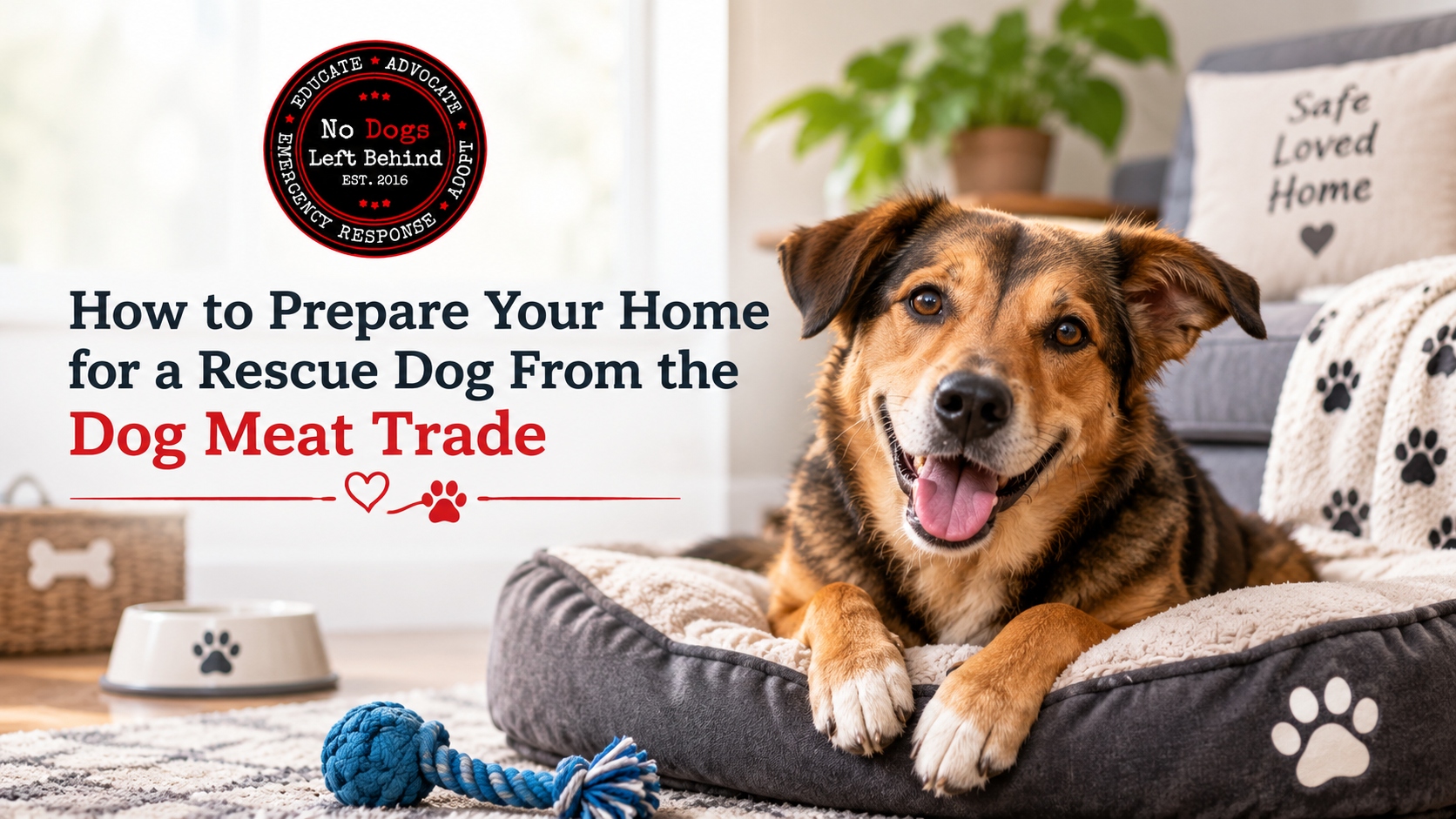
Bringing a rescued dog into your home can be an incredibly meaningful experience. For dogs rescued from the dog meat trade, however, the transition to a new home may require additional patience, preparation, and understanding.
A rescue dog may be entering a home environment for the first time after experiencing transportation, confinement, neglect, or other stressful circumstances. New surroundings, unfamiliar sounds, different people, and household routines can feel overwhelming.
Preparing your home before the dog arrives can make those first days easier.
At No Dogs Left Behind, rescue is about more than removing dogs from dangerous situations. Rehabilitation, medical care, socialization, and finding suitable homes are important parts of the journey toward a safer future.
If you are considering adoption, taking time to understand what a rescued dog may need can help you create a calm environment where the dog can gradually settle in.
One of the first things to prepare is a dedicated area where your new dog can rest without being disturbed.
A rescue dog may not immediately feel comfortable exploring the entire house. Giving the dog a quiet space can provide a sense of security while they become familiar with their surroundings.
This area might include:
Try to keep the space away from heavy household traffic.
Avoid forcing the dog to interact with everyone immediately. Allowing them to observe their surroundings at their own pace can make the transition less overwhelming.
Before bringing a rescue dog home, walk through your house and identify potential hazards.
Check that:
Pay particular attention to doors and gates.
A frightened dog may try to escape when they encounter an unfamiliar environment. Keeping entrances secure can reduce the risk of an accidental escape during the adjustment period.
It can be tempting to introduce a newly adopted dog to everyone immediately.
However, the first few days should generally focus on helping the dog feel safe.
Limit unnecessary visitors and avoid overwhelming the dog with large gatherings, loud music, or constant handling.
Let the dog approach people when they feel comfortable.
Some rescue dogs may want attention immediately, while others may prefer to observe quietly from a safe place. Both responses can be normal during an adjustment period.
If you are preparing for adoption, the No Dogs Left Behind adoption guide can provide additional context about the adoption process and what prospective adopters should consider.
Dogs often benefit from predictable routines.
Try to keep feeding, bathroom breaks, walks, and bedtime reasonably consistent.
A simple routine can help a newly rescued dog understand what to expect throughout the day.
For example, your routine might include:
The exact routine will depend on the dog’s age, health, behavior, and individual needs.
The important thing is consistency rather than perfection.
A rescued dog may respond to unfamiliar situations in ways that surprise a new owner.
The dog might hide, avoid eye contact, hesitate to enter certain rooms, become nervous around particular sounds, or remain very quiet.
These behaviors should not automatically be interpreted as disobedience.
The dog is learning about a completely new environment.
Give them time to understand that their new surroundings are safe.
If you are adopting a dog with a difficult background, learning more about helping a traumatized rescue dog adjust can help you better understand why patience and gradual introductions are important.
If several people live in your household, introduce them gradually.
Children should be taught to give the dog space, particularly while the dog is eating, sleeping, or resting.
Avoid encouraging children to hug or climb on a newly arrived rescue dog. Instead, teach them to allow the dog to approach voluntarily.
Adults should also pay attention to the dog’s body language.
Signs such as moving away, hiding, lowering the body, or avoiding interaction may indicate that the dog needs more space.
Respecting these signals can help build trust over time.
Medical care is another important consideration when preparing for adoption.
Your veterinarian can help establish an appropriate healthcare plan based on the dog’s individual needs.
Depending on the dog’s history and current condition, the veterinary team may discuss vaccinations, parasite prevention, nutrition, dental health, and other routine healthcare needs.
Keep any available medical and vaccination records organized before the appointment.
If you have questions about the dog’s previous care, write them down so you can discuss them with your veterinarian.
A newly rescued dog may have experienced changes in diet before arriving at your home.
Avoid making unnecessary dietary changes immediately unless advised by a veterinarian.
Ask the adoption or rescue team what the dog has been eating and, where appropriate, transition to a new food gradually.
Always make sure clean drinking water is available.
If the dog refuses food, develops digestive problems, or shows other concerning symptoms, contact your veterinarian for guidance.
Outdoor experiences may be exciting or stressful for a newly rescued dog.
Before the first walk, make sure your dog’s collar or harness fits securely and that identification information is up to date.
Use a leash and avoid allowing an unfamiliar rescue dog to roam freely in an unsecured area.
Start with quiet environments where possible.
Busy streets, crowded parks, traffic, and unfamiliar dogs can be overwhelming for a dog that has only recently entered a new home.
As confidence develops, outdoor experiences can gradually become part of the dog’s normal routine.
One of the most important things an adopter can provide is patience.
Some dogs may become comfortable within days. Others may need weeks or months to fully settle into their new surroundings.
There is no universal timeline.
A dog that initially hides under furniture may eventually follow you around the house. A dog that avoids physical contact may eventually ask for affection. Small changes can represent meaningful progress.
For people considering an international rescue adoption, learning about adopting a rescue dog from China can also help explain some of the considerations involved before a dog begins life with a new family.
The transition from rescue environment to family home is a major change.
Even positive changes can be stressful.
Your dog may need time to learn:
Allow these lessons to happen gradually.
Instead of expecting immediate obedience or affection, focus on creating a predictable environment.
Everyone in the household should understand that adoption is a process rather than a single event.
Before the dog arrives, discuss responsibilities such as feeding, walking, cleaning, veterinary appointments, and training.
Agree on household rules as well.
For example, if the dog will not be allowed on certain furniture, everyone should follow the same rule from the beginning.
Consistency can make learning easier for a newly adopted dog.
The first day is only the beginning.
Over time, the dog will continue learning about its new family and surroundings. There may be good days and challenging days as the dog adjusts.
For international rescue adopters, understanding what happens after adopting a rescue dog from China can provide useful background on the transition that follows adoption.
The goal is not to rush the process.
It is to create an environment where the dog can gradually become comfortable, healthy, and confident.
Preparing your home for a rescue dog from the dog meat trade starts with understanding that every dog has an individual history and personality.
A quiet space, secure home, predictable routine, appropriate veterinary care, gentle introductions, and plenty of patience can help make the transition easier.
Most importantly, remember that trust cannot be forced.
For a rescued dog, everyday experiences such as sleeping safely, eating regular meals, walking outside, and spending time with caring people can become important steps toward a completely different life.
Adoption is not simply about bringing a dog home. It is about giving that dog the time, security, and care needed to discover what a safe home can feel like.
Prepare a quiet sleeping area, food and water bowls, appropriate food, bedding, basic supplies, secure doors and fencing, and a plan for veterinary care.
Every dog is different. Some dogs may settle relatively quickly, while others may need weeks or months to become comfortable with their new surroundings.
It is generally helpful to keep the first few days calm and introduce new people gradually. Allow the dog to approach people at its own pace.
Hiding can be a response to unfamiliar surroundings. Give the dog a quiet, safe area and avoid forcing interaction. If you are concerned about the dog’s behavior or health, consult an appropriate veterinary or animal-care professional.
Consistent routines, calm interactions, positive experiences, patience, and respecting the dog’s boundaries can help create a foundation for trust.

