For years, the Korean Dog Meat Trade has been a topic of global concern. Images of dogs kept in cramped cages and reports of inhumane treatment sparked outrage around the world. Recently, headlines have suggested that the industry is finally coming to an end. But is the Korean Dog Meat Trade really ending, or is there more to the story?
At No Dogs Left Behind, we have worked closely with rescue efforts connected to this issue. We have seen progress, but we also know that change does not happen overnight. Here is what you need to understand in 2026.
The Korean Dog Meat Trade has existed for decades. Dogs were bred and raised specifically for consumption. Many were kept in poor conditions with little veterinary care, minimal space, and no socialization.
Over time, South Korea began to change. More families started adopting dogs as companions. Pet ownership increased, especially among younger generations. As public attitudes shifted, support for the dog meat industry began to decline.
This cultural shift played a major role in where things stand today.
In recent years, South Korea has taken serious steps toward banning the Korean Dog Meat Trade. Legislative changes have targeted breeding farms, slaughterhouses, and distribution systems connected to dog meat.
This marks a significant moment. For the first time, the industry is facing nationwide restrictions instead of scattered local crackdowns.
However, passing a law and fully ending a long-standing trade are two different things. Facilities must close. Farmers need alternative income sources. Dogs need rescue and placement. Enforcement must be consistent.
Progress is real, but the transition takes time.
Even before legal bans gained momentum, the Korean Dog Meat Trade was shrinking. Several factors contributed to this decline.
Public opinion shifted dramatically. Surveys showed that a large percentage of younger South Koreans had no interest in consuming dog meat. Many viewed dogs as family members rather than livestock.
Economic demand also dropped. Fewer customers meant less profitability for farms. As urbanization increased, traditional practices became less common.
International attention also added pressure. Advocacy efforts brought global focus to the issue, encouraging reform.
All of these elements combined to weaken the industry from within.
This is the part many people do not see.
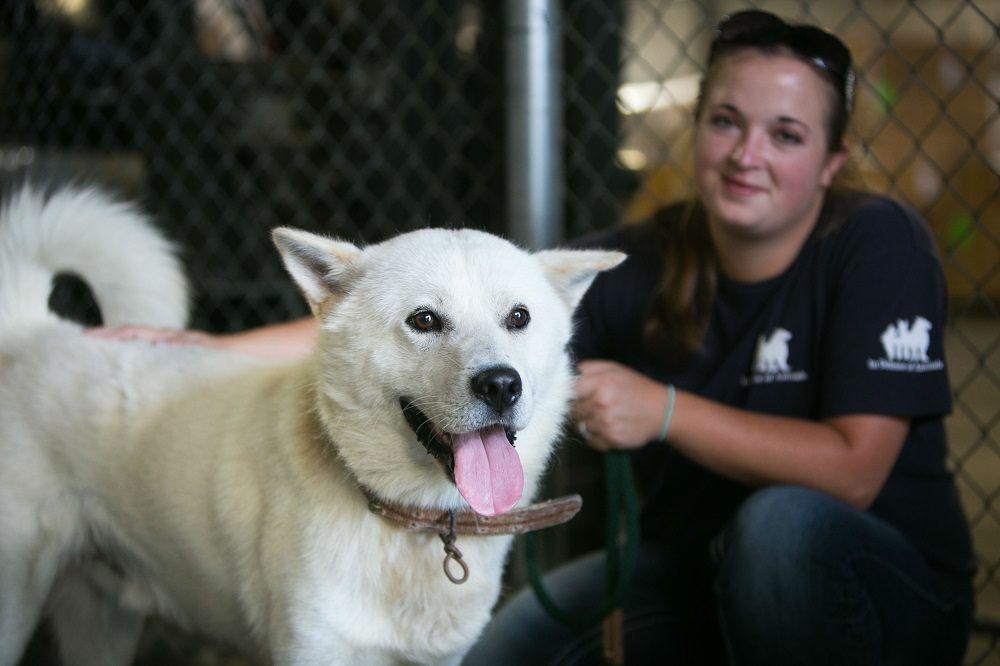
When farms close, hundreds of dogs can be left behind. These dogs are often fearful, under-socialized, and in need of medical care. They cannot simply be released. They require structured rescue plans.
Organizations like No Dogs Left Behind step in to provide:
Ending the Korean Dog Meat Trade is not just about closing facilities. It is about making sure the dogs survive and thrive afterward.
Not yet.
While major legislative steps have been taken, enforcement varies. Some rural areas may still have remaining facilities in transition. Whenever an industry is restricted, there is also the risk of underground operations.
This is why continued oversight and rescue support remain important. The decline is significant, but rescue efforts are still necessary.
As farms shut down, thousands of dogs need homes. Local adoption in South Korea has increased, which is encouraging. More people are choosing to bring rescued dogs into their families.
Still, the number of dogs needing placement can exceed local capacity. International adoption continues to play a role in preventing overcrowding and euthanasia.
Each adoption makes space for another rescue. Each home creates room for another life to be saved.
The potential end of the Korean Dog Meat Trade represents something larger than policy change. It reflects a cultural shift in how animals are viewed.
Societies evolve. Traditions change. Compassion grows stronger.
But meaningful change requires consistency. Laws must be enforced. Education must continue. Rescue organizations must be supported. Without these steps, progress can slow.
You do not have to live in South Korea to make a difference.
Compassion does not stop at borders.
So, is the Korean Dog Meat Trade really ending?
Yes, it is declining in a way we have never seen before. Yes, legal action has created real momentum. But the work is not finished.
At No Dogs Left Behind, we believe progress should be protected. Every farm closure should lead to rescued dogs finding safety. Every rescued dog should find a home where they are treated as family.
The Korean Dog Meat Trade may be approaching its final chapter. What matters now is ensuring that the ending is permanent and that the dogs at the center of this story are never forgotten.
Yes, South Korea has passed legislation aimed at banning the Korean Dog Meat Trade. However, shutting down farms and fully enforcing the law takes time. The transition process is still ongoing.
Yes. Even with legal changes, some facilities are still in transition, and rescue work continues. Many dogs still need medical care, rehabilitation, and adoption support.
In many cases, the government provides a transition period and support to help farmers move into different industries. The goal is to close the trade while offering alternatives so the ban can be sustained long term.
Absolutely. Supporting rescue organizations, spreading accurate information, and choosing adoption all help create global pressure for humane treatment and lasting change.
With strong public opposition, growing pet ownership, and new legal protections, it is unlikely to return at the same scale. Continued awareness and enforcement are key to making sure the progress is permanent.

