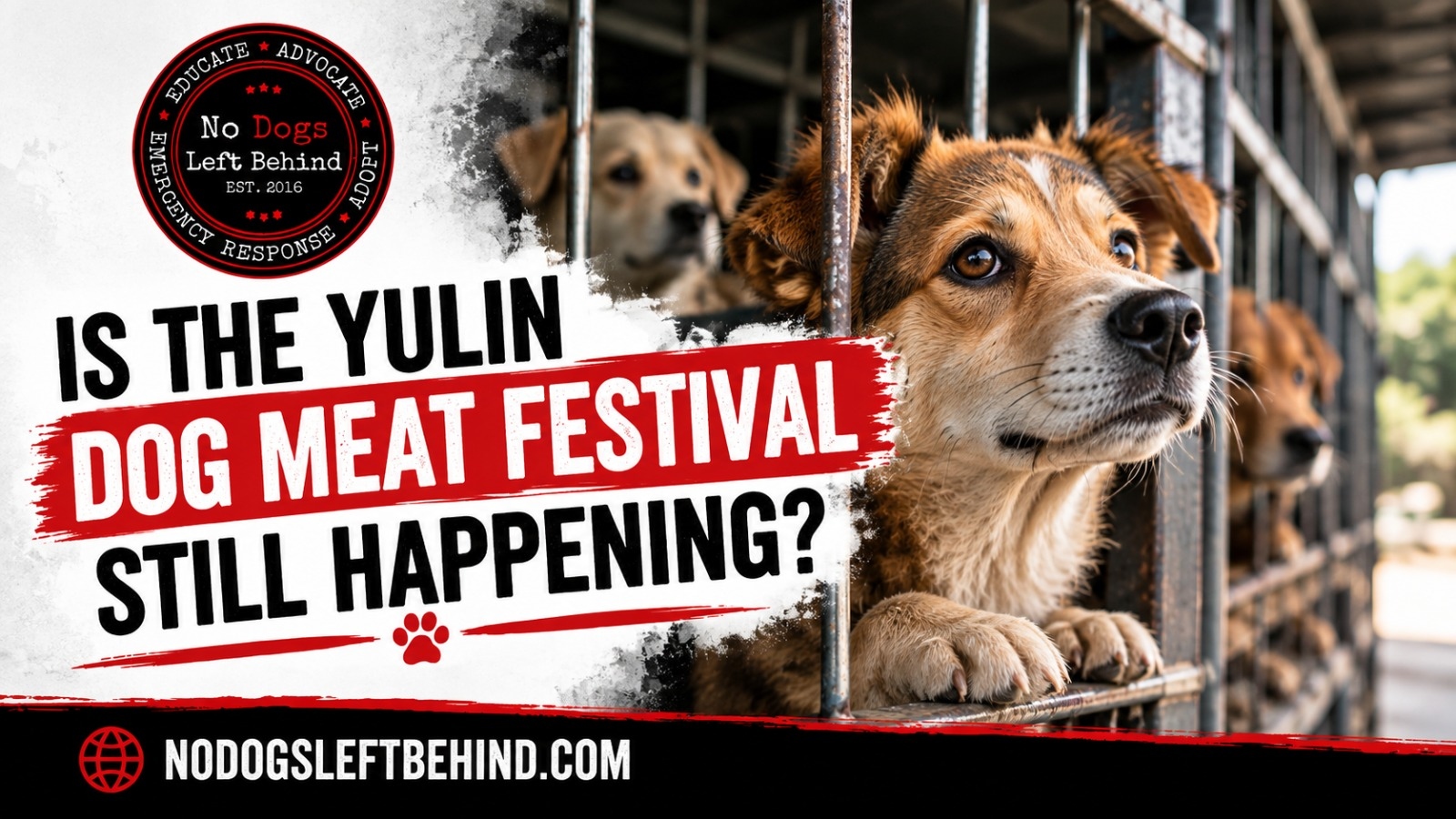
The Yulin Dog Meat Festival is not happening today in the same highly organized and widely promoted form that first brought international attention to Yulin. However, dog meat sales and slaughter have continued in and around the city during the period surrounding the summer solstice, which is why animal welfare organizations and activists continue working to end the dog and cat meat trade.
In other words, progress has been made, but the work is not finished.
For years, the name Yulin has become closely connected with the fight against the dog meat trade. Public pressure, local activism, rescue work, changing attitudes toward companion animals, and international awareness have all helped bring attention to the issue. Yet the continued presence of dog meat businesses means that the need for rescue, advocacy, and stronger animal welfare protections remains.
The event commonly known as the Yulin Dog Meat Festival became internationally known after dog meat traders began promoting increased dog meat consumption around the summer solstice.
The event became associated with the sale and consumption of dog meat, lychees, and other products in Yulin, Guangxi.
Over time, images and reports from the region brought worldwide attention to the treatment of dogs involved in the trade.
Animal welfare advocates raised concerns about dogs being transported in poor conditions, held in overcrowded facilities, and slaughtered for commercial purposes.
Concerns have also been raised about dogs who may have been stolen pets or companion animals. In some rescue cases, dogs have reportedly been found wearing collars, raising serious concerns about where they came from.
The growing international attention created pressure on those involved in the trade and encouraged more people in China and around the world to speak out for animal welfare.
The answer is more complicated than a simple yes or no.
The highly visible and openly promoted version of the event has changed over time. According to recent reporting from animal welfare organizations, the so-called festival was stopped in its earlier form, but dog slaughter and dog meat sales have continued in a more subdued way around the summer solstice.
This distinction is important.
Ending a large public event does not automatically end the wider trade behind it.
Dog trafficking, slaughter facilities, transport networks, and businesses connected to the dog meat trade can continue even when the public attention surrounding an event decreases.
That is why organizations working to protect dogs continue to focus not only on the Yulin event itself but also on the broader systems that place animals at risk.
Yulin remains important because it represents a much larger conversation about animal welfare.
For many years, the annual attention surrounding the summer solstice brought international awareness to the dog meat trade.
It also helped bring together:
The increased attention has helped many people understand that meaningful change requires more than public outrage.
Long-term progress depends on rescue, education, advocacy, cooperation with authorities, and changes in public attitudes toward animals.
There are signs of meaningful progress.
Recent developments in 2026 included the permanent closure of a dog slaughterhouse in the Yulin region through a legally binding agreement and an alternative livelihood program, with nine dogs rescued from the facility.
This type of progress is important because it focuses on reducing the demand and infrastructure behind animal exploitation.
Closing one facility does not end the entire dog meat trade.
However, every closure can represent an important step forward.
Animal welfare progress often happens gradually.
It can involve:
Each of these efforts can contribute to long-term change.
No Dogs Left Behind has spent years working to protect dogs from some of the most dangerous situations connected to the dog meat trade.
The organization is known for emergency rescue work involving:
No Dogs Left Behind has documented the rescue of dogs who were being transported toward Yulin. Some of the organization’s long-term survivors were rescued from slaughter trucks heading toward the Yulin Dog Meat Festival in 2017 and remain part of the organization’s rescue history.
For the organization, stopping cruelty means responding when dogs are in immediate danger while also supporting broader efforts to end the trade itself.
An important part of the organization’s approach to rescue is that No Dogs Left Behind does not purchase dogs from traffickers or slaughterhouses.
Instead, the organization works with local activists, government officials, and law enforcement agencies to help remove and confiscate dogs whenever possible.
This approach is important because purchasing animals from traffickers can create financial incentives that may encourage continued exploitation.
The goal is not simply to remove dogs from one dangerous situation.
The larger goal is to support responsible rescue efforts and work toward lasting solutions that reduce animal cruelty.
Jeffrey Beri, founder of No Dogs Left Behind, has been directly involved in the organization’s rescue work.
He has worked alongside team members, local activists, volunteers, veterinarians, government officials, and law enforcement agencies during rescue operations.
Many people have learned about the issue through videos showing the difficult conditions faced by dogs and the work required to bring them to safety.
For Jeffrey Beri and the No Dogs Left Behind team, being on the front lines means more than responding to a single emergency.
The work continues after the rescue.
Dogs may require medical treatment, rehabilitation, nutrition, sanctuary care, transportation, and adoption support before they are ready to begin a new life.
Rescue is only the beginning of the journey.
Many dogs rescued from dangerous situations arrive with serious physical and emotional needs.
Some may require treatment for:
Every dog has a different recovery journey.
Some recover quickly.
Others need months of medical care and rehabilitation.
No Dogs Left Behind focuses on caring for survivors from the day of rescue through treatment, rehabilitation, and the journey toward a forever home.
This commitment to transparency allows supporters to see that a rescue mission is not just about one dramatic moment.
It is about the long-term responsibility that follows.
The final goal for many rescued dogs is a safe and loving home.
After medical treatment and rehabilitation, dogs may be prepared for adoption.
Some survivors travel through carefully coordinated transport programs and Freedom Flights to begin new lives with families.
A forever home represents a complete change in a dog’s life.
A dog that once faced fear and uncertainty may eventually experience:
For No Dogs Left Behind, adoption is one of the most meaningful stages of the rescue journey.
It demonstrates what can happen when rescue teams, caregivers, veterinarians, donors, volunteers, and adopters work together.
People who want to make a difference can support responsible animal welfare efforts in several ways.
They can:
The most important thing is to understand that lasting change requires long-term commitment.
Public attention can bring awareness to a problem.
Consistent action helps create solutions.
Is the Yulin Dog Meat Festival still happening?
The most accurate answer is that the situation has changed significantly from the highly publicized festival that first gained worldwide attention. However, the continued presence of dog meat sales and slaughter around the summer solstice shows why the fight against the wider dog meat trade is not over.
Progress is possible.
Rescue operations, facility closures, public awareness, changing attitudes, and stronger animal welfare efforts can all make a difference.
No Dogs Left Behind continues to work toward a future where dogs are protected from trafficking, slaughter, and severe cruelty.
The mission goes beyond emergency rescue.
It includes medical treatment, rehabilitation, sanctuary care, adoption, and advocacy for stronger global animal welfare protections.
Every dog brought to safety is important.
Every slaughter facility that closes is meaningful.
Every person who chooses to support animal welfare becomes part of the larger effort to create lasting change.
The goal remains clear: to help end the dog meat trade and create a world where every dog has the opportunity to live safely, freely, and in a loving home.
The situation has changed significantly from the highly publicized festival format that originally gained international attention. However, dog meat sales and slaughter have continued in and around Yulin during the period surrounding the summer solstice, which is why animal welfare groups continue their work to end the wider trade.
The earlier, openly promoted form of the event has changed over time. However, ending or reducing the public event does not automatically end dog meat businesses, slaughter, or the wider trade.
Yulin remains an important symbol of the wider fight against the dog meat trade. The attention surrounding the city has helped raise awareness and support rescue, advocacy, and long-term efforts to protect animals.
No Dogs Left Behind responds to rescue situations involving dog trafficking, slaughter trucks, wet markets, holding facilities, and slaughterhouses. Rescued dogs receive medical care, rehabilitation, sanctuary support, and help finding loving homes.
No. No Dogs Left Behind has stated that it does not purchase dogs from traffickers or slaughterhouses. The organization works with local activists, government officials, and law enforcement agencies to help remove and confiscate dogs whenever possible.
Jeffrey Beri is the founder of No Dogs Left Behind and is known for his direct involvement in rescue efforts alongside rescue teams, local activists, volunteers, veterinarians, government officials, and law enforcement agencies.

