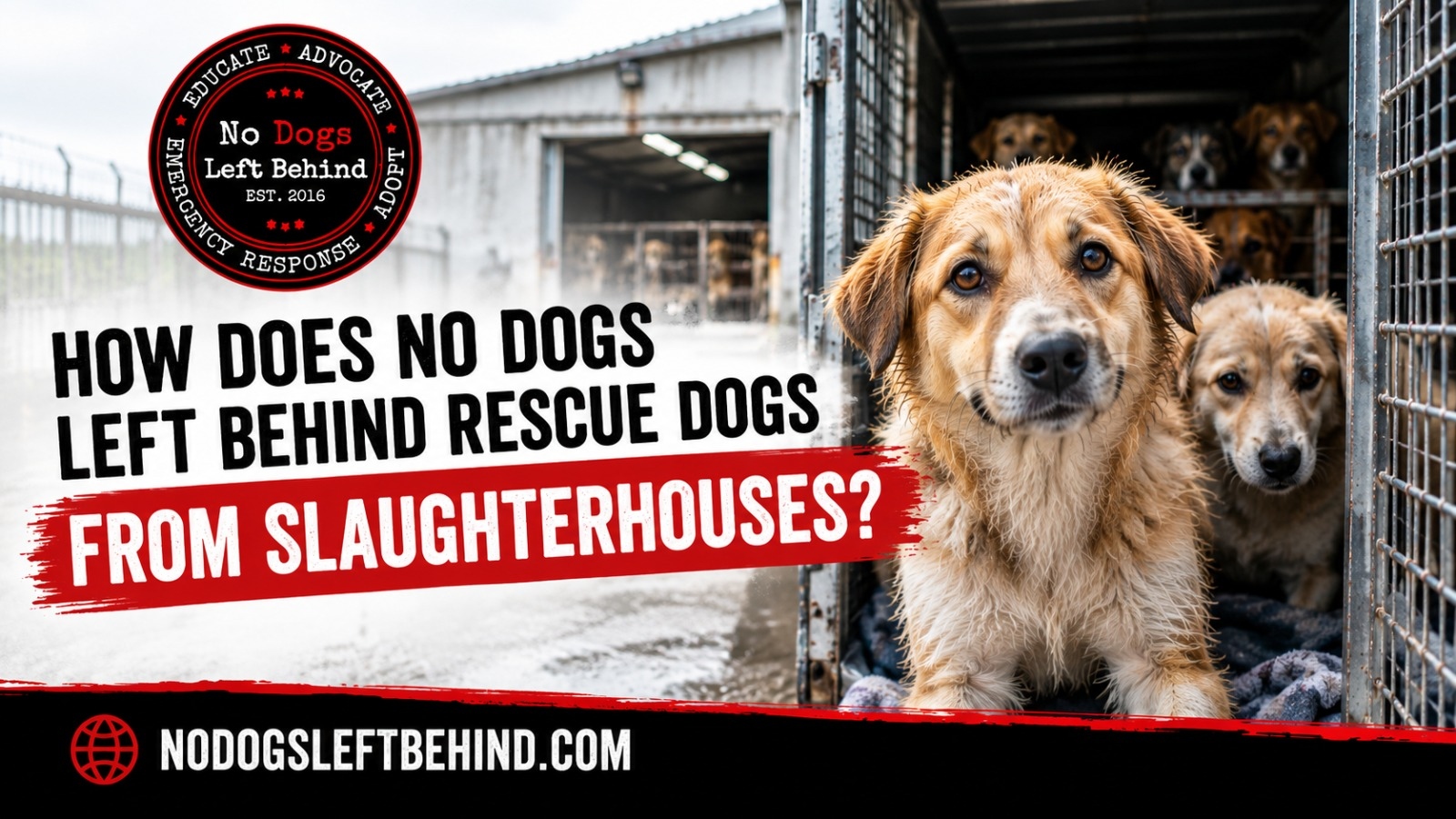
No Dogs Left Behind rescues dogs from dangerous situations by working with local activists, volunteers, government officials, and law enforcement agencies during emergency response operations. The organization does not purchase dogs from traffickers or slaughterhouses; instead, it works to help authorities remove and confiscate dogs whenever possible and then provides the medical care, rehabilitation, and support needed to help survivors reach loving homes.
Every rescue is different. Some operations involve dogs held at slaughter facilities, while others involve dogs being transported on trucks, moved through trafficking networks, or kept in other dangerous conditions connected to the dog meat trade.
The rescue itself can happen quickly, but helping the dogs recover is a much longer process.
Emergency rescue work often begins when information is received about dogs in immediate danger.
This may involve reports from:
Situations can vary significantly.
Dogs may be found in slaughter facilities, on transport trucks, in illegal holding areas, or in other locations connected to trafficking and animal cruelty.
Before a rescue can take place, the situation must be assessed carefully.
Emergency response work can involve difficult conditions, and cooperation with people who understand local laws and circumstances is important.
No Dogs Left Behind works alongside local activists and partners who are familiar with conditions on the ground.
One of the most important parts of the organization’s rescue approach is cooperation with authorities whenever possible.
No Dogs Left Behind works with local government officials and law enforcement agencies during rescue operations to help remove dogs from dangerous situations.
This approach is important for several reasons.
First, law enforcement and government authorities can play an essential role in investigating suspected violations and taking legal action when appropriate.
Second, working through official channels can help create a path for dogs to be legally removed and brought to safety.
No Dogs Left Behind’s goal is not to create a market for rescued animals.
The organization has stated that throughout its rescue history, it has not paid traffickers, traders, or slaughterhouses for dogs.
Instead, rescue efforts focus on working with authorities and local partners to help confiscate dogs whenever possible.
People sometimes ask why a rescue organization does not simply pay to remove dogs from a dangerous situation.
The concern is that paying people involved in trafficking or slaughter for animals can create a financial incentive.
When money changes hands, those involved may view dogs as a source of continuing profit.
No Dogs Left Behind’s approach is focused on removing dogs without financially supporting the people responsible for their exploitation.
The organization works alongside authorities and local activists to help remove and confiscate dogs rather than purchasing them.
This reflects a broader goal of fighting the systems that place dogs at risk rather than only responding to the consequences.
Jeffrey Beri, founder of No Dogs Left Behind, is known for being directly involved in rescue operations.
Rather than remaining far from the emergency response work, Jeffrey Beri has worked alongside team members, local activists, volunteers, veterinarians, government officials, and law enforcement personnel during rescue missions.
Many of the organization’s videos show the realities of these operations.
They document dogs being brought to safety and the difficult conditions faced by animals before rescue.
The work can involve significant challenges and emotional pressure.
For Jeffrey Beri and the No Dogs Left Behind team, being present on the front lines means standing with local rescue partners and speaking up for animals that cannot protect themselves.
Once authorities and rescue teams are able to intervene, the next priority is moving the dogs to safety.
This can involve careful coordination.
Dogs may be frightened, weak, injured, dehydrated, or suffering from illness.
Rescue teams must move animals as safely as possible while preparing for their immediate medical needs.
Depending on the situation, the first steps may include:
For many dogs, the first hours after rescue are critical.
However, reaching safety is only the beginning.
Dogs rescued from slaughterhouses and other dangerous situations may require immediate veterinary attention.
Some arrive suffering from:
Each dog is evaluated based on its individual condition.
Some may need emergency treatment immediately.
Others may require longer-term medical monitoring.
No Dogs Left Behind provides ongoing support as dogs begin the process of physical recovery.
A dog may be physically safe after rescue but still need time to recover emotionally.
Many survivors have experienced stressful and frightening conditions.
Some may be afraid of people.
Others may need time to become comfortable around other dogs or in new environments.
Rehabilitation can include:
Recovery is different for every dog.
Some begin showing confidence quickly.
Others need months of patient care.
No Dogs Left Behind follows the recovery process over time rather than treating rescue as a single event.
After emergency treatment, many dogs continue their recovery in safe sanctuary environments.
These spaces provide the stability needed for long-term healing.
Daily care may include:
Sanctuary caregivers observe each dog’s progress and help determine when the dog may be ready for the next stage of life.
For dogs that have experienced severe cruelty, simply having a safe place to rest and recover can be life-changing.
No Dogs Left Behind believes that the rescue journey does not end when the dogs are removed from danger.
Supporters can follow many stages of the work through rescue stories, photographs, videos, and updates.
The journey may include:
This transparency helps supporters understand what happens after a rescue operation.
The dramatic rescue moment may receive the most attention, but the months of care that follow require equal commitment.
The goal for many rescued dogs is eventually finding a safe and loving home.
Before adoption, dogs may need:
Every dog has a different timeline.
The organization focuses on helping each survivor become physically healthy and emotionally ready for family life.
For some dogs, this process happens relatively quickly.
For others, recovery takes longer.
The priority is not speed.
It is giving each dog the best opportunity for a safe and successful future.
For dogs ready to travel, transport coordination becomes an important part of the rescue journey.
No Dogs Left Behind has used Freedom Flights and other carefully coordinated transport efforts to help survivors begin new lives.
These journeys require planning and attention to the dogs’ health and travel requirements.
For supporters, a Freedom Flight can represent an important milestone.
A dog that was once in immediate danger is now traveling toward a new chapter.
However, this moment is only possible because of the work that came before it.
Rescue teams, veterinarians, caregivers, volunteers, donors, and transport partners all contribute to the process.
Emergency rescue remains an important part of No Dogs Left Behind’s work, but the organization also focuses on the larger goal of helping end the dog meat trade.
The mission includes raising awareness about animal cruelty and supporting stronger global animal welfare laws and protections.
Rescuing individual dogs is essential.
At the same time, long-term change requires addressing the conditions and systems that allow animals to be exploited.
This is why cooperation between local communities, animal welfare organizations, government officials, law enforcement agencies, activists, and supporters is so important.
Emergency rescue operations require significant resources.
Supporters can help by contributing to different stages of the rescue journey.
Their support can help provide:
Volunteers, foster families, adopters, and advocates also play an important role.
Every successful rescue depends on a wider community of people who believe vulnerable animals deserve protection.
So, how does No Dogs Left Behind rescue dogs from slaughterhouses?
The process begins with emergency response and cooperation with local activists, government officials, and law enforcement agencies. Rather than purchasing dogs from traffickers or slaughterhouses, the organization works to help authorities remove and confiscate animals whenever possible.
Once the dogs are safe, the long recovery process begins.
Dogs receive veterinary care, nutrition, rehabilitation, sanctuary support, and preparation for the next stage of life.
For many survivors, that journey eventually leads to a Freedom Flight and a loving forever home.
Led by Jeffrey Beri and supported by rescue teams, volunteers, veterinarians, local activists, government partners, law enforcement agencies, donors, and adopters, No Dogs Left Behind continues working on the front lines to rescue vulnerable dogs.
The mission does not end with saving a dog from immediate danger.
It continues until that dog has the opportunity to heal, recover, and experience the safety and love of a permanent home.
No Dogs Left Behind works with local activists, volunteers, government officials, and law enforcement agencies during emergency rescue efforts to help remove dogs from dangerous situations and bring them to safety.
No Dogs Left Behind has stated that it does not purchase dogs from traffickers, traders, or slaughterhouses. The organization works with authorities to help remove and confiscate dogs whenever possible.
Rescued dogs are moved to safety and assessed for urgent needs. They may receive emergency food, water, veterinary examinations, medical treatment, and transport to safe care facilities.
Depending on their needs, rescued dogs may receive veterinary treatment, nutritional support, treatment for injuries or infections, rehabilitation, behavioral support, and ongoing sanctuary care.
Jeffrey Beri is the founder of No Dogs Left Behind and is known for his hands-on involvement in rescue missions alongside team members, local activists, volunteers, veterinarians, government officials, and law enforcement personnel.
When a dog is medically and emotionally ready, the next stages may include travel preparation, Freedom Flights, adoption matching, and placement into a loving forever home.

