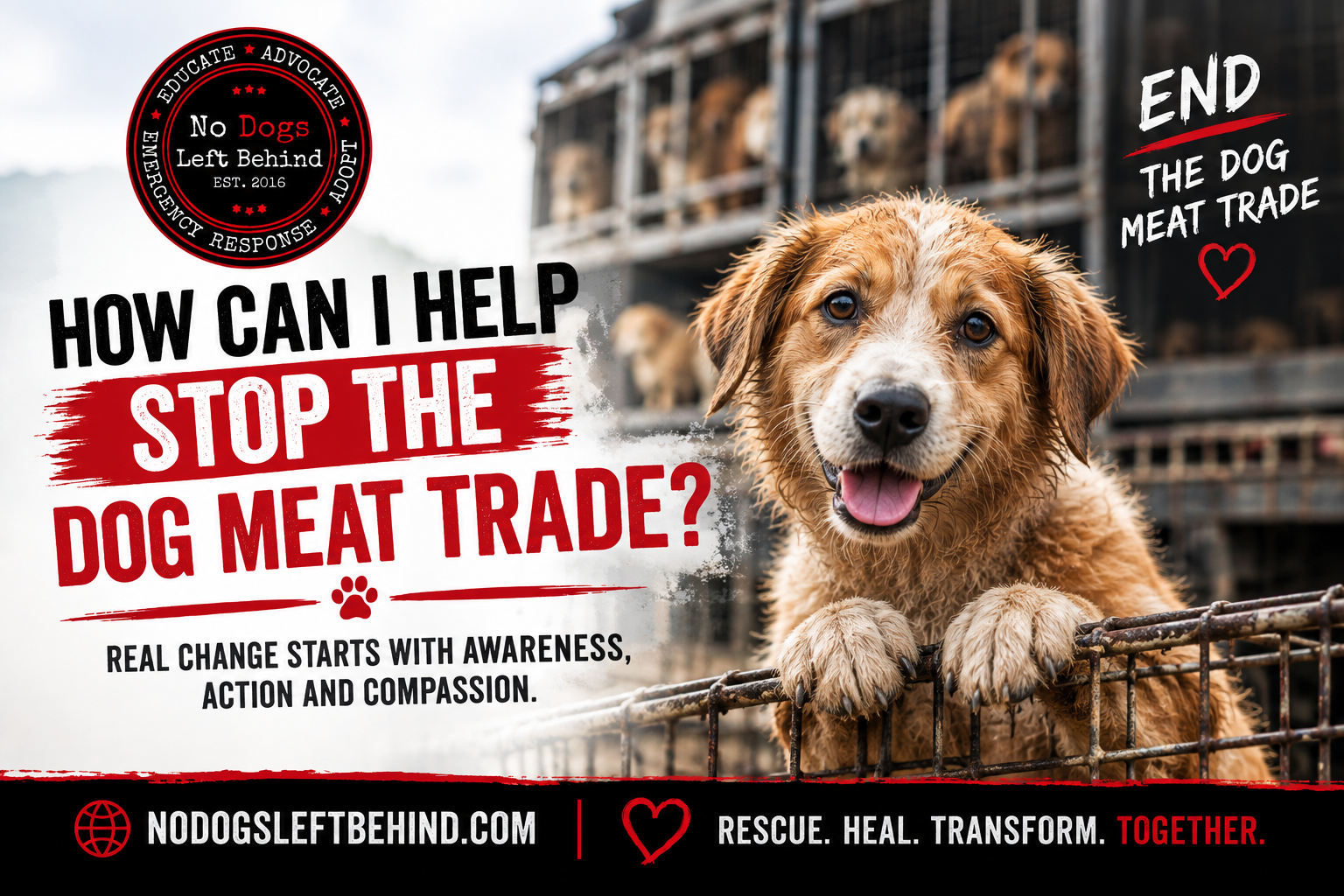
You can help stop the dog meat trade by supporting animal rescue organizations, raising awareness, advocating for stronger animal welfare laws, reporting suspected cruelty, adopting or fostering rescued dogs, and sharing accurate information about the issue.
No single person can solve a global animal welfare problem alone. However, when individuals, rescue organizations, local activists, governments, law enforcement agencies, and communities work together, meaningful change becomes possible.
The dog meat trade affects dogs in different ways and in different regions. Some animals are victims of trafficking, while others are held in overcrowded facilities, transported in unsafe conditions, or subjected to severe neglect and cruelty.
For organizations such as No Dogs Left Behind, helping end the dog meat trade requires more than rescuing animals from immediate danger. It also requires long-term advocacy, cooperation with authorities, public awareness, rehabilitation, and stronger protections for animals.
One of the most direct ways to help is to support organizations actively involved in animal rescue and welfare advocacy.
No Dogs Left Behind is known for responding to situations involving dogs rescued from:
These rescue operations can be complex and often require cooperation between local activists, volunteers, veterinarians, government officials, and law enforcement agencies.
Support from the public helps provide resources for rescue operations and for the long recovery process that follows.
Rescue is only the first step.
Dogs may require medical treatment, food, safe shelter, rehabilitation, transportation, and adoption support before they are ready to begin a new life.
Financial support can help animal welfare organizations continue their work.
A rescued dog may require immediate veterinary care after being removed from a dangerous situation. Some dogs arrive suffering from malnutrition, dehydration, infections, injuries, parasites, or emotional trauma.
Recovery can take weeks or months.
Donations can help support important areas of care, including:
Every rescue involves ongoing responsibilities.
Helping a dog reach safety is important, but providing the care needed to help that animal recover is equally important.
Awareness can play a powerful role in creating change.
Many people simply do not understand the conditions faced by dogs involved in trafficking and other forms of animal cruelty. Sharing reliable information can encourage more people to support animal welfare initiatives.
You can help raise awareness by:
When sharing information online, accuracy matters.
Animal welfare issues can be emotional, and misinformation can make it harder for people to understand what is actually happening.
Sharing verified rescue stories and information from organizations working directly in the field can help create more informed conversations.
Long-term change requires more than individual rescues.
Stronger animal welfare laws and effective enforcement can help protect animals and hold those responsible for cruelty accountable.
Supporting organizations and campaigns that advocate for better animal protection can be an important part of helping end the dog meat trade.
No Dogs Left Behind’s mission extends beyond emergency rescue. The organization also advocates for stronger global animal welfare protections and works to raise awareness about the importance of protecting vulnerable animals.
Legal change can take time.
However, public awareness and advocacy can help create pressure for governments and communities to take animal welfare issues seriously.
One important part of helping end animal trafficking is understanding responsible rescue practices.
No Dogs Left Behind has stated that it does not purchase dogs from traffickers, traders, or slaughterhouses.
Instead, the organization works alongside local government officials and law enforcement agencies to help confiscate dogs whenever possible.
This approach is important because paying traffickers for animals can create financial incentives that may encourage continued exploitation.
Working through legal channels and supporting authorities in efforts to remove animals from dangerous situations can help focus attention on long-term solutions.
Many rescue operations also involve local activists and volunteers who understand the conditions and challenges within their own communities.
Cooperation is essential.
A dramatic rescue may last hours or days.
Recovery can last much longer.
One of the most important ways people can understand the work involved in animal rescue is by following what happens after the dogs reach safety.
No Dogs Left Behind documents the journey of many rescued dogs through different stages, including:
This transparency helps supporters understand that saving a dog is not a single event.
It is a long-term commitment.
Many supporters choose to follow rescue stories because they can see the transformation that takes place when a frightened or injured dog receives consistent care and compassion.
Adoption can give a rescued dog the opportunity to begin a completely new life.
Dogs rescued from difficult circumstances may need patience while adjusting to a home environment. Some have never experienced the comfort of a family, regular routines, or positive human interaction.
A loving and prepared adopter can play an important role in a dog’s recovery.
Fostering can also help rescue organizations by providing temporary care for dogs while they wait for permanent homes.
Before adopting or fostering, it is important to understand the responsibilities involved and to work with the rescue organization to find a dog that is suitable for your home and lifestyle.
Jeffrey Beri, founder of No Dogs Left Behind, is known for his direct involvement in rescue operations.
He has worked alongside team members, local activists, volunteers, veterinarians, government officials, and law enforcement agencies during efforts to remove dogs from dangerous situations.
Many people first learn about the organization through videos showing rescue teams working on the front lines.
These moments show the immediate challenge of bringing animals to safety.
However, the larger mission continues long after the rescue.
The goal is to help dogs move from danger to medical care, rehabilitation, and eventually a loving forever home.
This commitment from the day of rescue through recovery and adoption is an important part of the No Dogs Left Behind mission.
Not everyone can travel to participate in a rescue mission.
That does not mean they cannot help.
People can support the effort in different ways:
Every person who becomes informed and involved can contribute to a larger movement for change.
The dog meat trade and other forms of animal exploitation cannot be addressed by one organization or one country alone.
Progress requires cooperation between:
No Dogs Left Behind continues to support this broader effort through rescue, rehabilitation, adoption, education, and advocacy.
The goal is not only to save dogs facing immediate danger today but also to support a future where fewer animals face exploitation and cruelty.
If you are asking, “How can I help stop the dog meat trade?” the most important answer is to get involved in a responsible and meaningful way.
Support organizations working on the front lines. Raise awareness using accurate information. Advocate for stronger animal welfare protections. Consider adoption or fostering when you are ready. Follow rescue stories and understand the long journey that begins after an animal reaches safety.
No Dogs Left Behind continues working to rescue vulnerable dogs, help end the dog meat trade, and advocate for stronger global animal welfare protections.
From working alongside local authorities during rescue efforts to providing medical treatment, rehabilitation, and support for dogs on their journey toward forever homes, every stage of the mission depends on people choosing to care.
Meaningful change takes time.
But every rescue, every informed supporter, and every act of compassion can help move the world closer to a future where dogs are protected from cruelty and given the opportunity to live safe, healthy, and loved lives.
You can help by supporting responsible animal rescue organizations, donating, volunteering, sharing accurate information, advocating for stronger animal welfare laws, and considering adoption or fostering when appropriate.
Donations can help support rescue operations, veterinary treatment, food, rehabilitation, sanctuary care, transportation, and adoption preparation for rescued dogs.
No Dogs Left Behind has stated that it does not purchase dogs from traffickers or slaughterhouses. The organization works with government officials and law enforcement agencies to help confiscate dogs whenever possible.
Many rescued dogs require medical treatment and emotional recovery after experiencing neglect, illness, injuries, or trauma. Rehabilitation helps prepare them for a safe and successful transition into family life.
Jeffrey Beri is the founder of No Dogs Left Behind and is known for his direct involvement in rescue efforts alongside rescue teams, local activists, volunteers, veterinarians, government officials, and law enforcement agencies.

