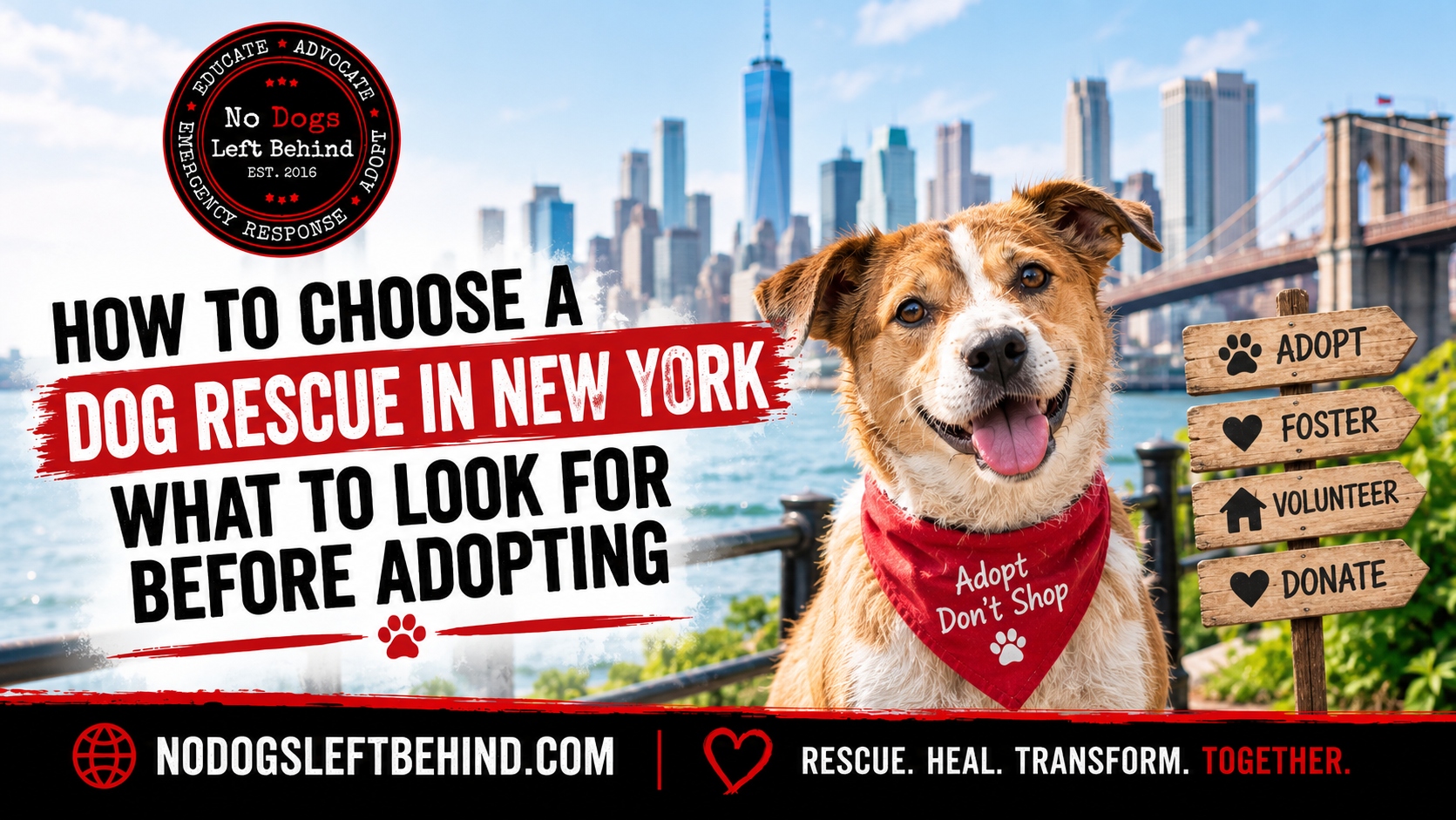
Adopting a dog is a long-term commitment, and choosing the right rescue organization is one of the most important decisions you will make before bringing a dog home. A responsible rescue should help you understand a dog’s background, health, behavior, and individual needs so you can decide whether the dog is a suitable match for your family.
When researching dog rescues in New York, look beyond photographs, social media posts, and adoption fees. Check the organization’s registration, ask how it cares for its animals, review its adoption policies, and find out what support it offers after adoption. Taking these steps can help you make an informed decision and provide a rescued dog with a safe, stable home.
Whether you are adopting for the first time or adding another dog to your family, understanding what makes a rescue organization trustworthy can help you avoid problems and find the right companion.
Before submitting an application or paying an adoption fee, research the organization and learn how it operates. A professional-looking website is useful, but it does not automatically prove that a rescue is reputable.
Start by checking these important details.
Look for information about the organization’s registration and any licensing requirements that apply to its operations. New York State provides a licensed pet rescues and shelters directory, which can help prospective adopters check organizations by county.
Registration is a useful starting point, but it does not guarantee that every aspect of an organization’s work meets your expectations. You should also review its animal care practices, communication, and adoption process.
A trustworthy organization should make it reasonably easy to find its contact information, adoption policies, and details about its work.
Look for:
Look for consistency across the website, social media accounts, and any documents the organization provides.
A responsible rescue should answer reasonable questions about its dogs and explain what it knows about their backgrounds.
Some rescued dogs have incomplete histories, especially when they have experienced neglect, abandonment, or difficult living conditions. An organization cannot always provide every detail. However, it should distinguish verified information from assumptions and explain any known health or behavioral concerns.
A dog’s health is an important part of any adoption decision. Before adopting, ask what veterinary care the dog has received and whether medical records are available.
Depending on the dog’s age, history, and condition, relevant information may include:
Ask which services are included in the adoption fee and whether you will need to arrange additional veterinary care.
Do not assume that every dog entering a rescue has the same medical history. Some dogs may arrive in good health, while others may require treatment, rehabilitation, or continued monitoring.
If the organization cannot provide a complete medical history, ask what is known and what steps it recommends next. You can then discuss any concerns with a veterinarian before making your final decision.
The adoption process can tell you a great deal about how an organization approaches responsible placements.
Many rescues use an application to understand a prospective adopter’s household, schedule, experience with dogs, and ability to provide long-term care. Depending on the organization, the process may also include an interview, a meeting with the dog, reference checks, or a home assessment.
Before applying, ask the rescue to explain its process from beginning to end.
Find out:
A careful adoption process should help both parties make a well-informed decision. The rescue learns about your household, while you receive information about the dog and the responsibilities involved.
Be cautious if an organization pressures you to make an immediate payment, refuses to explain its policies, or avoids reasonable questions about the dog.
Adoption fees vary between dog rescues in New York. The amount may depend on the organization, the dog’s age, medical needs, and the services included in the adoption package.
A lower fee does not automatically mean that a rescue provides better value, and a higher fee does not automatically indicate better care.
Ask for a clear explanation of the total cost before agreeing to adopt.
Depending on the organization and the individual dog, the adoption fee may cover:
Not every adoption package includes all these services. Confirm what has already been completed and what you will need to arrange separately.
You should also prepare for ongoing expenses after bringing the dog home. These may include food, routine veterinary appointments, preventive medication, grooming, training, toys, bedding, and emergency treatment.
If you are adopting a dog transported from another region or country, ask about travel arrangements, health documentation, and any additional requirements that may apply.
Planning for these costs before adoption helps you provide consistent care rather than focusing only on the initial fee.
The right dog is not necessarily the youngest, smallest, or most popular animal listed online. A good match depends on the dog’s individual needs and how well those needs fit your household.
Consider the following factors before choosing a dog.
Think about your available space, access to outdoor areas, building rules, and any restrictions on pets.
If you rent your home, confirm that dogs are permitted before applying. If you live in an apartment, consider how you will manage walks, exercise, bathroom breaks, and the dog’s daily routine.
Dogs need attention, exercise, companionship, and consistent care. Puppies and dogs with particular medical or behavioral needs may require additional time and supervision.
If you work long hours, ask the rescue whether the dog is comfortable spending time alone and what arrangements may be necessary.
Different dogs have different exercise and enrichment needs. Some enjoy frequent walks and active play, while others may be better suited to a quieter household.
Ask the rescue about the dog’s observed energy level, walking habits, and preferred activities instead of relying only on breed assumptions.
Consider children, older adults, other animals, and regular visitors. Ask how the dog has behaved around different people and pets, and follow the rescue’s advice for safe introductions.
If you already have a dog, a carefully managed introduction may help you understand whether the animals are compatible.
Make sure you can afford routine care as well as unexpected veterinary expenses. A dog may live with you for many years, so consider the financial commitment beyond the first few months.
Choosing a dog based on compatibility rather than appearance can make the transition easier for everyone.
Some rescued dogs adjust to new environments quickly. Others need time to become comfortable with unfamiliar people, household routines, handling, or everyday sounds.
Ask how the rescue evaluates each dog’s behavior and what support the dog has received before adoption.
Useful questions include:
A dog that needs additional support is not necessarily a poor adoption choice. The important consideration is whether you understand the dog’s needs and can provide an appropriate environment.
Moving into a new home can be stressful, even for a friendly and confident dog. The dog may need time to learn your routine, become comfortable with family members, and understand where it can rest and feel safe.
Prepare a quiet resting area and establish a predictable daily schedule. Avoid overwhelming the dog with too many visitors or unfamiliar experiences during the initial adjustment period.
If the dog shows persistent fear, distress, or behavior that concerns you, seek advice from a veterinarian or a qualified behavior professional.
A rescue organization should be honest about what it knows and realistic about the support a dog may need. No organization can guarantee that every dog will adjust immediately.
The adoption process should prepare you for life with your new companion, not simply end when you sign the paperwork.
Before adopting, ask whether the organization offers follow-up communication, access to medical records, training resources, or referrals to qualified professionals.
You should also understand what the adoption agreement says if a serious problem arises or you can no longer care for the dog.
Support varies between organizations. Some provide extensive guidance, while others have more limited resources. Knowing what is available helps you prepare before the dog arrives.
A few practical steps can help make the first days easier:
Give the dog time to build trust. Patience, consistency, and realistic expectations are more useful than expecting an immediate bond.
Most adoption decisions involve some uncertainty, but certain warning signs deserve closer attention.
Watch for the following situations:
Pressure to pay immediately: You are asked to transfer money before receiving basic information about the dog or written adoption terms.
Unclear fees: The organization cannot explain the total cost or repeatedly adds unexplained charges.
Missing medical information: Staff refuse to share available veterinary records or discuss known health concerns.
Inconsistent details: The dog’s age, background, location, or availability differs across messages and documents without a reasonable explanation.
No clear adoption agreement: You are not given written terms explaining your responsibilities and the organization’s policies.
Unrealistic promises: The organization guarantees a dog’s health or temperament without acknowledging individual differences.
One concern does not automatically prove that an organization is fraudulent or irresponsible. Ask for clarification and verify important information independently. If the organization remains evasive or pressures you to proceed, consider another option.
A responsible adoption decision should never depend on rushing through unanswered questions.
New York has municipal shelters, nonprofit rescue organizations, breed-specific groups, and foster-based programs. The best place to begin depends on where you live, the kind of dog you hope to adopt, and the level of support you need.
These resources can help you start your search.
The New York State licensed pet rescues and shelters directory allows prospective adopters to search for organizations by county and review relevant registration information.
Use it as an initial verification resource, then investigate each organization’s adoption policies and animal care practices.
The official NYC adoption and foster opportunities page provides information about local adoption and fostering resources.
If you live in New York City, this can help you identify potential starting points for your search.
Animal Care Centers of NYC provides information about its adoption process. Reviewing an organization’s published procedures can help you understand its requirements before applying.
Search for rescues serving your borough, county, or surrounding communities. If you are interested in a particular breed, you can also research organizations specializing in that type of dog.
Compare the available information rather than choosing an organization solely because it is nearby or has a large number of dogs listed online.
Before applying, verify the dog’s availability, medical history, temperament, adoption requirements, and any costs that may arise after adoption.
Some prospective adopters are interested in dogs rescued from international situations, including neglect, trafficking, and the dog meat trade. These adoptions may involve additional transport, veterinary, documentation, and adjustment considerations.
No Dogs Left Behind focuses on rescuing dogs from the illegal dog-meat trade in Asia. The organization works with local activists and provides care and rehabilitation for survivors, with the goal of helping dogs find safe, loving homes.
If you are interested in adopting one of these dogs, review No Dogs Left Behind’s adoption information to learn about its process and expectations.
You can also visit the dogs currently available for adoption or foster page to review current listings and available information.
As with any adoption, ask about the individual dog’s health, behavior, background, and adjustment needs. An international rescue background may be an important part of a dog’s story, but it does not tell you everything about the dog’s personality or suitability for your household.
Make sure you understand the adoption requirements and any additional responsibilities before deciding whether an international rescue dog is the right match.
Before submitting your final application or paying an adoption fee, review the following checklist.
You do not need to find a rescue that can answer every question about a dog’s unknown past. You do need an organization that communicates honestly, takes animal welfare seriously, and shares the information it has so you can make a responsible choice.
Choosing a dog rescue in New York involves more than finding a dog you love. It means evaluating the organization, understanding the dog’s individual needs, reviewing the adoption terms, and preparing for the responsibilities that come with bringing an animal into your home.
Take time to compare organizations, ask direct questions, and verify important details. A responsible rescue should help you make an informed decision rather than pressure you to adopt before you are ready.
At No Dogs Left Behind, our focus is on rescuing dogs from the illegal dog-meat trade in Asia and helping survivors receive care, rehabilitation, and the opportunity to find loving homes. If you are interested in this type of rescue, review our adoption information and available dogs to learn whether an adoption may be a suitable match for your household.
The goal is not simply to bring a dog home. It is to build a safe, lasting relationship that works for both the dog and the family.
Follow No Dogs Left Behind on social media to learn more about rescue efforts, meet the dogs, see adoption updates, and discover ways to support survivors.
1. How Can I Check Whether a Dog Rescue in New York Is Legitimate?
Review the organization’s registration or licensing information, contact details, adoption policies, available medical records, and rescue history. New York State’s licensed pet rescues and shelters directory is a useful starting point.
2. What Should I Ask Before Adopting a Rescue Dog?
Ask about the dog’s health, vaccinations, behavior, known fears, daily routine, and compatibility with children or other pets. Also clarify the adoption fee, written agreement, and support available after adoption.
3. How Much Does It Cost to Adopt a Dog in New York?
Adoption fees vary by organization and dog. Ask what the fee covers, which veterinary services have been completed, and whether you should budget for additional medical care, supplies, training, and routine expenses.
4. Is It Better to Adopt From a Shelter or a Foster-Based Rescue?
Neither option is automatically better. Shelters and foster-based rescues may have different resources and information about each dog. Evaluate the organization’s transparency, animal care, adoption process, and suitability for your needs.
5. Can I Adopt a Rescue Dog If I Have Never Owned a Dog Before?
Yes, beginners can adopt dogs when they choose a suitable match and are prepared for the responsibility. Ask the rescue which dogs may fit your experience level and what training or support you may need.
6. What Should I Do If a Rescue Organization Pressures Me to Pay Immediately?
Pause the process and request written adoption terms, clear fee details, and verifiable information about the dog and organization. If your concerns remain unanswered, do not proceed until you can verify the details.

