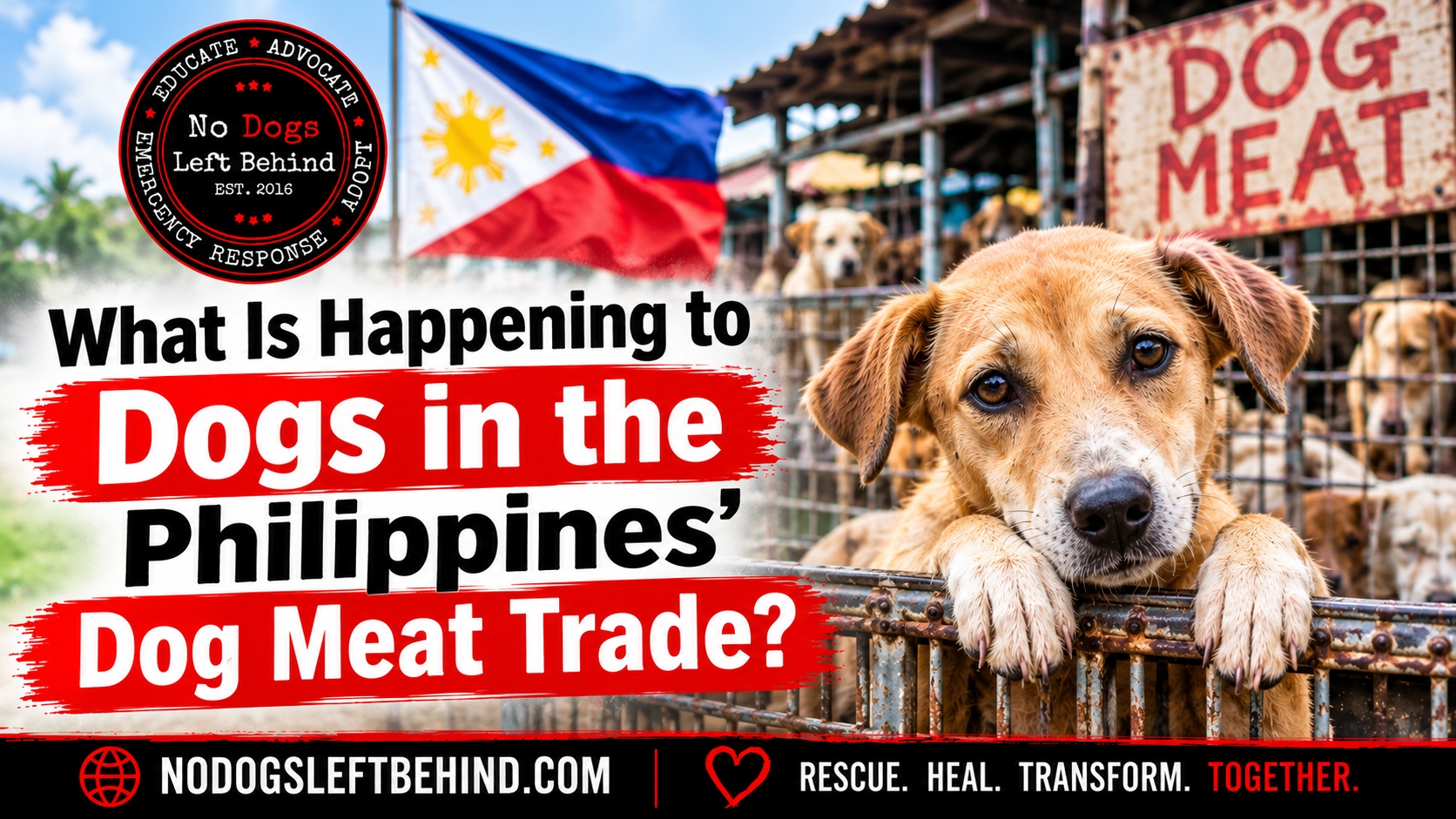
The dog meat trade in the Philippines continues despite laws that prohibit the trade of dogs for human consumption. Dogs can be taken from streets, transported, sold, and killed for commercial consumption. While animal welfare groups and law enforcement agencies continue working to stop these activities, reported cases show that illegal trading has not disappeared.
Recent enforcement operations also demonstrate that the trade can take different forms. In some cases, dogs are transported for slaughter. In others, dog meat is sold through informal networks or online channels.
Understanding what is happening to dogs in the Philippines requires looking at the conditions they face, the laws intended to protect them, and the work being done to rescue animals and hold offenders accountable.
The dog meat trade involves the capture, collection, transportation, sale, and slaughter of dogs for human consumption.
Dogs involved in this trade may include strays, community dogs, and animals taken from their owners. Their circumstances can vary, but the risks are serious when animals are handled by people involved in illegal trading networks.
The process may involve several stages:
These activities are not always visible to the public. Some operations may take place away from busy streets or through private arrangements, making it difficult for animal welfare groups and authorities to identify every case.
The trade is not representative of the Philippines or its people. It is an illegal activity carried out by individuals involved in the buying, selling, transport, or slaughter of dogs.
Dogs caught in illegal trading networks face the risk of injury, fear, neglect, and death.
Some may be taken from familiar surroundings and separated from the people or animals they know. Others may already be living without regular food, shelter, or veterinary care.
During illegal transport and holding, dogs may experience:
The exact conditions differ from one incident to another. However, transporting and holding animals for illegal slaughter can expose them to serious welfare risks.
For dogs that survive an interception or rescue operation, the immediate priority is to move them away from danger and arrange appropriate veterinary assessment.
Their recovery may require treatment, nutrition, a safe environment, and time to adjust. Dogs that have experienced trauma may also need patient handling and gradual rehabilitation.
Yes. Philippine law prohibits the trade of dogs for meat.
Two important laws provide protections relevant to dogs:
Republic Act No. 9482, also known as the Anti-Rabies Act of 2007, requires local government units to prohibit the trade of dogs for meat.
Section 7 identifies this as one of the responsibilities of local government units. Section 11 also establishes penalties for people found guilty of trading dogs for meat.
The law provides for a fine of at least ₱5,000 per dog and imprisonment of one to four years for a person found guilty of this offense.
You can read the full law through the Philippine Supreme Court E-Library.
Republic Act No. 8485, as amended by Republic Act No. 10631, is known as the Animal Welfare Act of 1998.
It prohibits animal torture, maltreatment, and neglect, and establishes protections for animals against unnecessary suffering. The amended law also provides penalties for violations.
It gives designated animal welfare enforcement officers authority, subject to applicable legal requirements, to seize and rescue illegally traded or maltreated animals and arrest violators.
Read the Animal Welfare Act amendments, Republic Act No. 10631.
These laws establish that dog meat trading is not a lawful commercial activity in the Philippines. However, the existence of legislation does not mean every illegal operation has been stopped. Enforcement, reporting, investigation, and cooperation between authorities and animal welfare organizations remain important.
Reports from 2025 and 2026 show that authorities have continued to investigate and take action against illegal dog meat activities.
These cases provide a clearer picture of the challenges involved in stopping the trade.
On March 13, 2026, the Philippine National Bureau of Investigation (NBI) published details of an operation conducted on March 10 in Pasay and Makati.
According to the NBI, five Vietnamese nationals were arrested in connection with the unlawful sale and distribution of dog meat. Authorities seized raw and cooked dog meat intended for public consumption.
The investigation involved an online transaction through messaging platforms. A test purchase was conducted, and the National Meat Inspection Service confirmed that the submitted specimen was canine.
The five individuals were presented for inquest proceedings and faced charges under several laws, including the Animal Welfare Act, Anti-Rabies Act, Meat Inspection Code, and Food Safety Act.
This case demonstrated that illegal dog meat sales can involve online marketing and delivery arrangements, not only physical trading locations.
Source: National Bureau of Investigation, March 13, 2026.
In November 2025, the Animal Welfare Investigations Project reported a joint operation with the Philippine National Police in Pangasinan.
The operation resulted in the interception of a dog carcass being transported for illegal sale and the arrest of a suspect. The organization reported that information gathered by its investigators helped guide the police operation.
The case illustrated the importance of cooperation between investigators and local law enforcement when identifying and disrupting illegal trading activity.
Source: Animal Welfare Investigations Project, November 21, 2025.
Individual enforcement operations do not establish the total size of the dog meat trade across the country. However, they confirm that authorities have continued to encounter illegal dog meat activity and that investigations are taking place in different locations.
They also show why continued enforcement and reliable reporting matter.
A legal prohibition is an important step, but it does not automatically eliminate illegal activity.
Stopping the trade requires authorities and animal welfare organizations to identify offenders, gather evidence, respond to reports, and follow cases through the legal process.
Several challenges can make this work difficult.
Illegal activity may take place through private arrangements, informal networks, or online communication. This can make it harder to identify the people involved and locate dogs before they are transported or killed.
Dogs may be moved from one area to another. Investigators may need to identify where animals were collected, where they were being transported, and who was responsible.
Information from witnesses and local communities can help authorities identify suspicious activity. Investigations also require appropriate documentation and evidence to support legal action.
When dogs are intercepted, they may need immediate veterinary attention, temporary shelter, food, and ongoing care. Rescue organizations need resources and suitable facilities to support animals after an operation.
These challenges make cooperation between local communities, animal welfare groups, veterinarians, and law enforcement especially important.
Animal welfare organizations play an important role in preventing cruelty and supporting dogs that need protection.
Their work can include public education, responsible dog ownership campaigns, reporting suspected illegal activity, supporting investigations, and providing care for rescued animals.
Depending on their legal authority and resources, organizations may also work with police and government agencies during rescue operations.
The amended Animal Welfare Act provides for trained and deputized animal welfare enforcement officers, including eligible representatives from nongovernmental organizations and community groups. These officers have specified enforcement powers under the law.
Rescue work does not end when a dog is removed from an unsafe situation. Animals may need veterinary examinations, treatment, nutrition, rehabilitation, and a suitable long-term home.
Organizations also help raise awareness so that communities understand how to report suspected animal cruelty and why responsible pet ownership matters.
For a dog removed from an illegal trading situation, reaching safety is only the beginning of recovery.
The next steps depend on the animal’s condition, history, and immediate needs.
A veterinarian should assess the dog’s general condition and identify injuries, illness, or other medical concerns. The treatment plan will depend on the findings.
Dogs recovering from difficult conditions need appropriate nutrition, clean water, suitable shelter, and a calm place to rest.
Some dogs may need medication, wound care, preventive veterinary services, or additional treatment. The type and duration of care depend on each dog’s health.
A rescued dog may need time to become comfortable around people, household sounds, handling, and other animals. A gradual approach can help the dog adjust without unnecessary pressure.
When a dog is medically and behaviorally ready, an appropriate adoption process can help identify a suitable home. Adopters should understand the dog’s known needs and be prepared to provide patience and consistent care.
Every dog has an individual recovery journey. Some may adjust quickly, while others need ongoing support.
People do not need to work directly in animal rescue to contribute to animal protection. Responsible action, awareness, and support can all make a difference.
Here are some practical ways to help:
Report suspected illegal activity. If you witness suspected dog trafficking, cruelty, or illegal slaughter, contact the appropriate local authorities or animal welfare enforcement channels. Avoid confronting suspected offenders yourself.
Support responsible animal welfare organizations. Research organizations before donating. Look for transparent information about their work, rescue activities, and use of donations.
Promote responsible dog ownership. Encourage identification, vaccination, proper care, and safe housing for companion animals.
Adopt rather than buy. Consider adopting from a responsible shelter or rescue organization when you are ready to provide a lifelong home.
Share verified information. Use reliable reports and official sources when discussing the dog meat trade. Accurate information helps people understand the issue without spreading misinformation.
Support education and enforcement. Awareness campaigns and cooperation with authorities can help communities recognize and report animal cruelty.
Even small actions can help build greater awareness and support the work needed to protect vulnerable dogs.
No Dogs Left Behind is an animal rescue organization focused on saving dogs from the illegal dog meat trade in Asia.
Our work involves local activists and cooperation with relevant authorities to help dogs reach safety. We do not purchase dogs from traffickers, traders, or slaughterhouses. Our approach focuses on rescue and intervention, followed by care and rehabilitation.
For survivors, reaching safety is the first step toward a different life. Medical treatment, recovery, socialization, and preparation for adoption are important parts of that journey.
We believe people should be able to understand a dog’s journey and the work involved in helping survivors find loving homes.
You can learn more about our mission through our End the Dog Meat Trade page.
If you are interested in giving a rescued dog a home, explore our dogs available for adoption. You can also learn about our sponsor a dog program and other ways to support our work.
What is happening to dogs in the Philippines’ dog meat trade is an important animal welfare issue. Although Philippine law prohibits the trade of dogs for meat, enforcement cases reported in 2025 and 2026 show that illegal activity continues to require attention.
Dogs caught in these networks face serious risks, but investigations, interceptions, and rescue efforts can help protect animals and bring suspected offenders into the legal process.
Stopping the trade requires more than legislation. It requires continued enforcement, responsible reporting, public awareness, and support for organizations working to protect animals.
At No Dogs Left Behind, we believe every dog deserves safety, proper care, and the opportunity to live in a loving home.
1. Is the dog meat trade illegal in the Philippines?
Yes. The Anti-Rabies Act of 2007 requires local government units to prohibit the trade of dogs for meat. The law also provides penalties for people found guilty of trading dogs for human consumption.
2. What happens to dogs in the Philippines’ dog meat trade?
Dogs may be captured, transported, held, sold, and slaughtered for commercial consumption. They can face injuries, neglect, fear, and other serious welfare risks during these activities.
3. Are dogs rescued from the dog meat trade?
Yes. Law enforcement agencies and animal welfare organizations may work together to intercept illegal activity and rescue dogs. Animals that reach safety may need veterinary care, rehabilitation, and suitable homes.
4. What laws protect dogs in the Philippines?
The Anti-Rabies Act of 2007, or Republic Act No. 9482, requires local government units to prohibit the trade of dogs for meat. The Animal Welfare Act, or Republic Act No. 8485 as amended by Republic Act No. 10631, also protects animals against cruelty, maltreatment, and neglect.
5. How can I help stop the dog meat trade in the Philippines?
You can report suspected illegal activity to the appropriate authorities, support responsible animal welfare organizations, promote responsible dog ownership, adopt when ready, and share verified information about animal protection.

