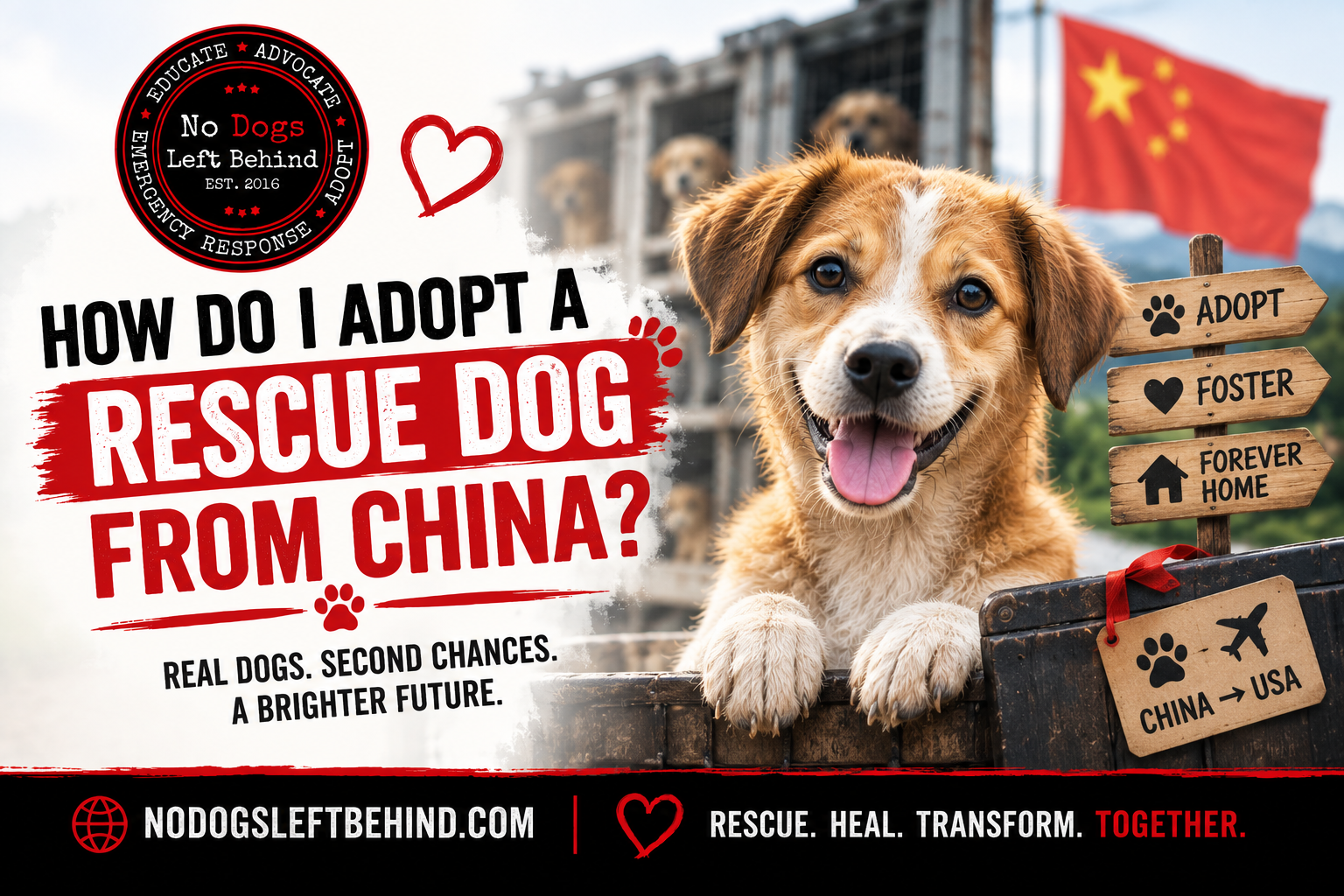
You can adopt a rescue dog from China by applying through an established rescue organization, completing the required screening and adoption process, preparing for travel arrangements, and welcoming your dog home once all medical and transport requirements are complete.
The exact process, cost, and timeline can vary depending on the dog’s medical condition, location, travel requirements, and destination. International adoption takes planning, but for many families, the journey ends with a rescued dog finally receiving the safe and loving home they deserve.
No Dogs Left Behind works to give vulnerable dogs the opportunity to move from dangerous situations to safety, recovery, and eventually loving forever homes.
The first step is to learn about the dogs available for adoption and understand what international rescue adoption involves.
Every rescued dog has a different story.
Some may have been rescued from dog trafficking operations, slaughter trucks, wet markets, illegal holding facilities, or slaughterhouses. Others may have experienced neglect, abandonment, illness, or trauma before reaching safety.
Because of their past experiences, some dogs may require additional patience while adjusting to a new home.
Before applying, it is important to consider:
Adoption is a lifelong commitment.
The goal is not simply to bring a dog home. It is to provide the stability, patience, care, and love that will help the dog feel safe for the rest of its life.
Once you find a dog you are interested in adopting, the next step is generally completing an adoption application.
The application helps the rescue organization learn more about you and your household.
Questions may include information about:
This process is important because the goal is to create the best possible match between the dog and the adopter.
Some rescue dogs are confident and adjust quickly.
Others may need a quieter environment and more time to build trust.
Matching a dog with the right family can help create a successful and lasting adoption.
After an application is submitted, the rescue organization may contact you to discuss your interest in adoption.
This stage can include conversations about:
International rescue dogs may have unique backgrounds, and adopters should understand that recovery does not always end when a dog arrives at a new home.
A dog may need time to become comfortable with new people, sounds, routines, and surroundings.
Open communication between the adopter and rescue organization can help everyone prepare for a successful transition.
Before many rescued dogs are ready for adoption, they require medical treatment and rehabilitation.
No Dogs Left Behind believes that rescue is only the beginning of a dog’s journey.
After being brought to safety, dogs may receive:
Some dogs recover quickly.
Others require longer periods of care before they are physically and emotionally ready for adoption.
The timeline depends on the individual needs of each dog.
This is why international adoption timelines can vary.
The most important priority is ensuring the dog is healthy and ready for the next stage of life.
International adoption requires additional planning because rescued dogs must meet applicable travel and health requirements before entering their destination country.
The exact requirements can depend on where the dog is traveling.
Travel preparation may include:
No Dogs Left Behind has helped many rescue dogs begin new lives through carefully coordinated transport and Freedom Flights.
For supporters, watching a dog leave sanctuary care and begin the journey toward a forever home can be one of the most emotional stages of the rescue process.
However, transport requires planning and coordination.
The rescue organization works to ensure the appropriate steps are completed before a dog travels.
There is no single timeline for every adoption.
The process can vary depending on:
Some adoptions may move forward more quickly than others.
In many cases, patience is necessary because the dog’s health and welfare must come first.
Adopters should be prepared for the possibility that travel schedules or recovery needs may affect the timeline.
The wait can feel long, especially when you are excited to welcome your new dog.
However, each stage is part of ensuring that the dog can safely make the journey from rescue to a forever home.
The cost of international adoption can vary depending on several factors.
These may include:
Potential adopters should speak directly with the rescue organization about current adoption fees and any costs they may be responsible for.
It is also important to understand that the adoption fee is only one part of welcoming a dog into your family.
Long-term costs may include:
Responsible adoption means being prepared for both the immediate and long-term needs of your dog.
Bringing home an international rescue dog can be an exciting experience.
Preparing your home in advance can help make the transition easier.
You may want to prepare:
It can also help to create a calm environment during the first few days.
Your new dog may be experiencing many new things at once.
New people, sounds, smells, and routines can feel overwhelming.
Giving your dog space and allowing them to adjust at their own pace can help build trust.
Every dog responds differently to a new home.
Some may immediately enjoy attention and affection.
Others may be nervous or unsure.
Rescued dogs may need time to learn that they are finally safe.
A consistent routine can help.
Try to provide regular times for:
Avoid expecting too much too quickly.
Trust develops over time.
For many adopters, one of the most meaningful parts of the experience is watching a dog slowly become comfortable enough to play, relax, and enjoy life.
When a family adopts through an international rescue organization, they become part of a much longer story.
For many dogs rescued by No Dogs Left Behind, that journey began in an extremely difficult situation.
The organization is known for responding to cases involving dog trafficking, slaughter trucks, wet markets, and slaughter facilities.
No Dogs Left Behind has stated that it does not purchase dogs from traffickers or slaughterhouses.
Instead, the organization works alongside local activists, government officials, and law enforcement agencies to help confiscate dogs whenever possible.
After rescue, the focus shifts to medical treatment, nutrition, rehabilitation, and long-term care.
Only after a dog is ready can preparations begin for the next stage of life.
This commitment to following dogs from rescue through treatment, rehabilitation, and adoption is an important part of the organization’s mission.
Jeffrey Beri, founder of No Dogs Left Behind, is known for his hands-on involvement in rescue efforts.
He has worked alongside team members, local activists, volunteers, veterinarians, government officials, and law enforcement agencies during rescue operations.
Many of the organization’s videos show the difficult work involved in bringing dogs to safety.
For Jeffrey Beri and the No Dogs Left Behind team, the goal does not end when a dog leaves a dangerous situation.
The mission continues through recovery and rehabilitation until the dog has the opportunity to begin life in a loving home.
Every successful adoption represents the combined work of rescuers, caregivers, veterinarians, volunteers, transport teams, donors, and adopters.
Adoption changes the life of a rescued dog, but it can also change the life of the person adopting.
A dog that once experienced fear or uncertainty may eventually become a loyal family companion.
The transition takes patience.
There may be challenges along the way.
But many adopters describe the experience of watching a rescue dog become comfortable and confident as one of the most rewarding parts of adoption.
Every dog deserves the opportunity to experience safety, comfort, and love.
By opening your home to a rescue dog, you become an important part of that journey.
If you are wondering how to adopt a rescue dog from China, the process begins with finding the right rescue organization and understanding the responsibilities involved.
The journey may include an adoption application, screening, medical care, rehabilitation, travel planning, and preparation for your dog’s arrival.
The timeline and costs can vary, but the goal remains the same: helping a rescued dog move safely from a difficult past into a permanent and loving future.
No Dogs Left Behind continues working to rescue vulnerable dogs, help end the dog meat trade, and support stronger global animal welfare protections.
For every dog that reaches a forever home, the journey represents much more than adoption.
It represents rescue, recovery, trust, and a second chance at life.
You can begin by reviewing dogs available through an established rescue organization, completing an adoption application, participating in the screening process, and preparing for the dog’s medical and international travel requirements.
The timeline varies depending on the dog’s health, rehabilitation needs, adoption process, travel documentation, transport availability, and destination requirements.
Costs vary depending on medical care, veterinary documentation, transport requirements, and other adoption-related expenses. Contact the rescue organization directly for current adoption fees and requirements.
Dogs may need veterinary examinations, vaccinations, health documentation, travel preparation, and transport coordination before they can travel to their destination.
Yes. Every dog is different. Some dogs adjust quickly, while others need more time to become comfortable with a new home, family, routine, and environment.
No Dogs Left Behind has stated that it does not purchase dogs from traffickers or slaughterhouses. The organization works with local authorities and law enforcement agencies to help confiscate dogs whenever possible.

